5 Best Website Builders for Jewelry Business:
Costs, Pros, and Cons for Ecommerce Online Store
 18 mins read
5 Best Website Builders for Jewelry Business:
Costs, Pros, and Cons for Ecommerce Online Store
18 mins readChoosing the best website builder for your jewelry store means finding the right balance between standard ecommerce functionality and the unique requirements of your business.
Every jewelry website needs high-quality product visuals, secure checkout, inventory synchronization, payment processing, and reliable performance. At the same time, some businesses require custom jewelry configurators, B2B functionality, or integrations with specialized systems.
The challenge is that no platform excels equally in every area. A solution that works well for a local D2C jewelry brand may create limitations for an international retailer selling to both B2B and B2C clients. Catalog complexity, sales model, customization requirements, and growth plans all influence the right platform choice.
This article reviews the most reliable jewelry ecommerce platform options, so you can weigh the pros and cons and find the right fit for your business.
Whidegroup provides jewelry development services to help you pick the right platform and build a store with the features you need.
| Platform | Best for | Strongest jewelry use case | Main limitation |
|---|---|---|---|
| Magento 2 / Adobe Commerce | Mid-sized to enterprise businesses. | Complex catalogs, custom jewelry configurators, B2B sales, multi-store operations. | High maintenance and development costs. |
| Shopify | Small and growing D2C brands. | Simple, visual-driven catalogs, omnichannel sales through social commerce. | Limited back-end customization. |
| BigCommerce | Growing, omnichannel businesses. | Multichannel selling, combined online and offline selling, moderate catalog complexity. | Restricted custom development. |
| WooCommerce | WordPress-based content-driven brands. | Jewelry stores that rely on SEO, storytelling, and content marketing. | Ongoing management of hosting, plugin compatibility, and security. |
| Punchmark | Established jewelry retailers. | Built-in jewelry-specific tools and services, all in one place. | High price, vendor lock-in, and closed ecosystem. |
Before comparing features and pricing of different jewelry website builder platforms, define what your store needs today and how those needs may change as your business grows.
Key requirements to consider:
Modern ecommerce platforms fall into two main groups: software-as-a-service (SaaS) solutions and open-source systems. When helping clients choose a platform, we start exactly by evaluating the requirements outlined above to determine whether a SaaS or open-source approach is more suitable for specific business.
A jewelry store with a simple catalog and standard sales flow may work well on a SaaS platform. In contrast, a business with complex product logic, custom workflows, B2B pricing, or advanced integrations often benefits from an open-source solution.
The table below provides a quick comparison of these two platform types before we move on to a detailed review of popular website builders.
| Requirement | Open-Source Platforms(Magento, WooCommerce) | SaaS Platforms(Shopify, BigCommerce, Punchmark) |
|---|---|---|
| Sales model | Better for businesses that combine B2C and B2B sales, operate multiple storefronts due to international sales, support custom pricing agreements, or run complex wholesale processes. | Often sufficient for D2C brands and retailers that rely on standard ecommerce workflows and need built-in omnichannel selling tools. |
| Catalog and product data complexity | Handle complex catalogs with many attributes, custom product types, advanced filtering, made-to-order products, or non-standard inventory rules. | Work well for simpler catalogs with standard product variants, collections, and inventory management requirements. |
| Storefront functionality | Recommended when the storefront requires highly customized customer experiences and unique product presentation. | Suitable for stores that rely on built-in features, apps, or industry-specific tools available within the platform ecosystem. |
| Third-party integrations | Recommended when the business depends on multiple ERP, CRM, PIM, POS, manufacturing, or supplier systems, especially if custom integrations are required. | Designed for businesses whose needs can be covered by ready-made integrations with popular payment, shipping, marketing, marketplace, and social commerce tools. |
| Website customization | Better for businesses that need custom jewelry configurators, ring builders, advanced pricing logic, or unique checkout flows. | A practical option when built-in functionality, apps, and standard ecommerce workflows are enough to cover key cover business requirements. |
| Long-term resources | Works best for businesses that need more flexibility and control, and are ready for higher development and support costs. | Better for businesses that prefer faster launches, lower technical involvement, and predictable monthly costs. |
With this framework in mind, let’s compare specific jewelry ecommerce platforms by their strengths, limitations, costs, and best-fit use cases. We will start with open-source options, including Magento and WooCommerce, and then move to SaaS jewelry store ecommerce platforms.
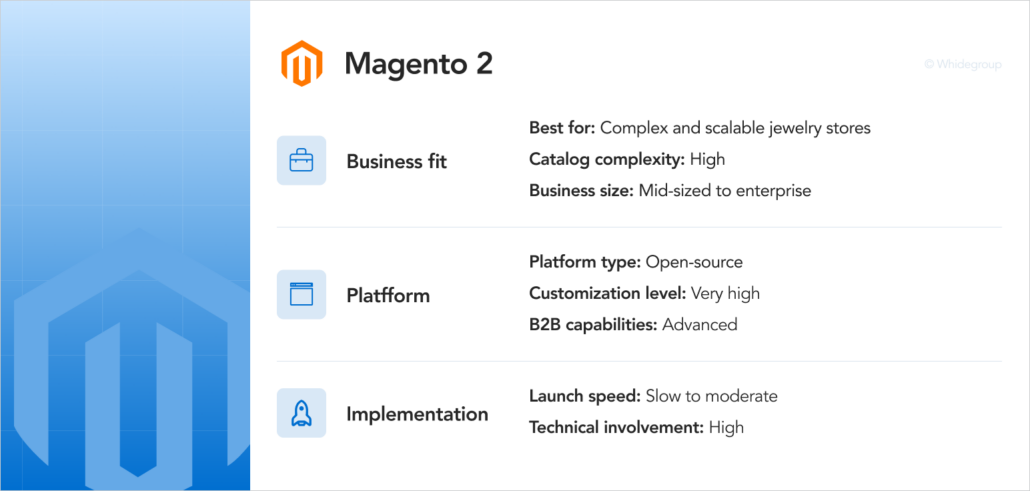
Magento stands out as a top choice for businesses seeking advanced functionality and scalability. This platform supports both B2C and B2B business models, which makes it ideal for businesses targeting both individual customers and wholesale buyers.
The cost structure varies significantly between Magento Open Source and Adobe Commerce.
Magento Open Source (formerly Magento Community Edition) is free to download and use, making it a viable option for businesses that want open-source flexibility and have access to development resources.
While the software itself is free, store owners still need to cover Magento support costs like hosting, domain registration, security certificates (SSL), and ongoing maintenance. Additionally, businesses may need to hire developers to customize the platform.
Adobe Commerce (formerly Magento Enterprise Edition) is a premium, paid solution that includes hosting and advanced features right out of the box. It’s designed for larger, more complex jewelry businesses that need additional functionality, such as B2B tools, advanced marketing capabilities, and customer segmentation.
The pricing for Adobe Commerce is not disclosed, but it’s known that the cost depends on business gross merchandise value and may exceed $1M per year.
Given that 72% of platform users choose Magento 2 Open Source, we’ll focus on this version in the rest of the section.
Here are the features that Magento 2 provides out of the box:
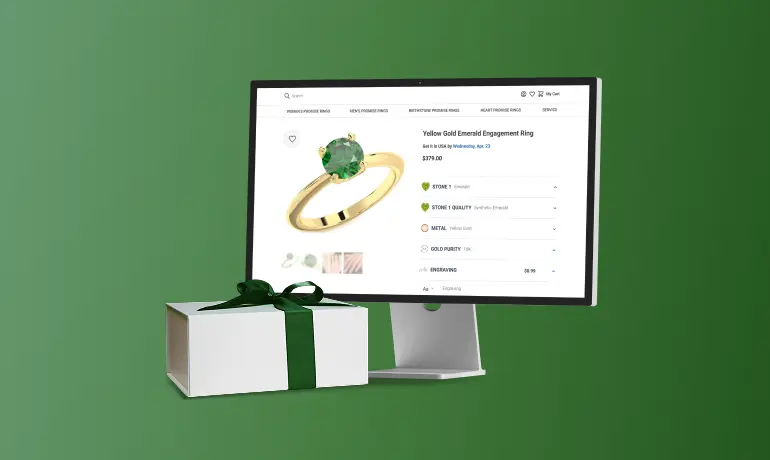
For jewelry stores, these features matter most when the catalog includes many product attributes: metal type, gemstone, carat, size, collection, availability, and certification details. Magento’s attribute and catalog logic supports more complex product structures than simpler website builders.
Magento is ideal for mid-sized to enterprise jewelry businesses that:
For small stores with simple catalogs, Magento is not a practical choice due to long development timelines and higher ongoing support costs compared to SaaS solutions.
Whidegroup develops bespoke Magento solutions, from complex integrations to custom jewelry configurators.
WooCommerce is an open-source ecommerce plugin for WordPress, so it works well for brands that want to combine online sales with strong content marketing. Unlike Shopify or BigCommerce, WooCommerce offers more control through WordPress themes, plugins, and customization.
Among the best ecommerce platforms for jewelry stores, WooCommerce is most relevant for simple or moderately complex catalogs needing flexibility, SEO-friendly content, and lower entry costs.
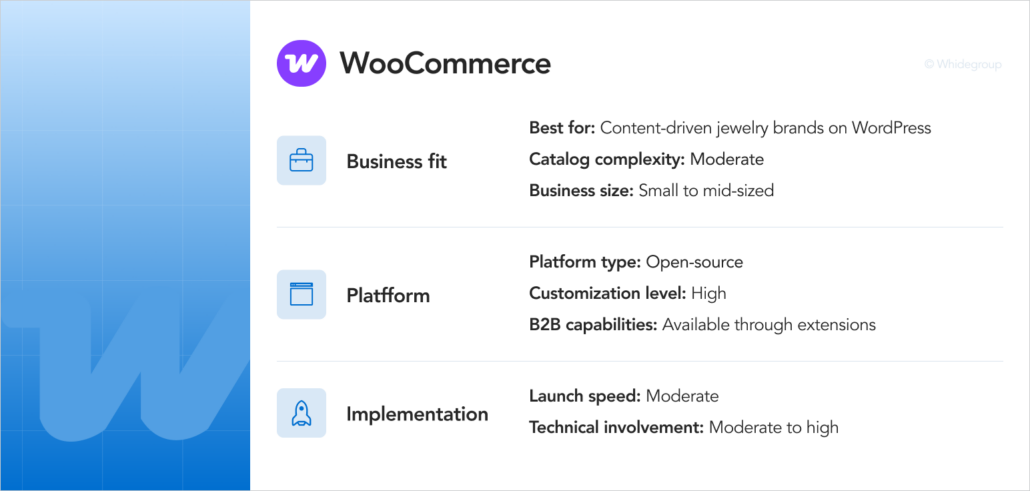
WooCommerce itself is free to install, but there are several costs associated with running a jewelry store:
WooCommerce is a good choice if your brand:
At the same time, WooCommerce is not the best option for established jewelry businesses that need extensive customization and integrations, require advanced B2B jewelry ecommerce software, or want minimal technical maintenance.
Shopify is a strong jewelry ecommerce software for brands that need a visually appealing online store, fast launch, simple store management, and tools for social selling. The platform works especially well for small and mid-sized D2C jewelry businesses with relatively simple product logic.
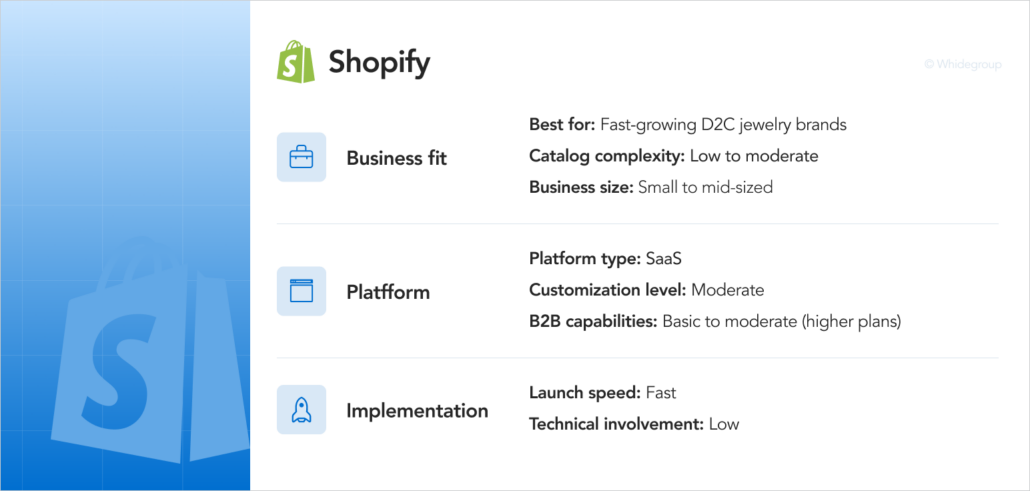
Shopify offers several pricing tiers to fit different business needs:
In addition, Shopify charges from 0.2 to 2.0% transaction fees if you use third-party payment providers instead of Shopify Payments. Additional costs also arise from apps, premium themes, or custom development services, depending on the needs of your store.
The detailed cost breakdown for building a store is available in our Shopify website development cost article.
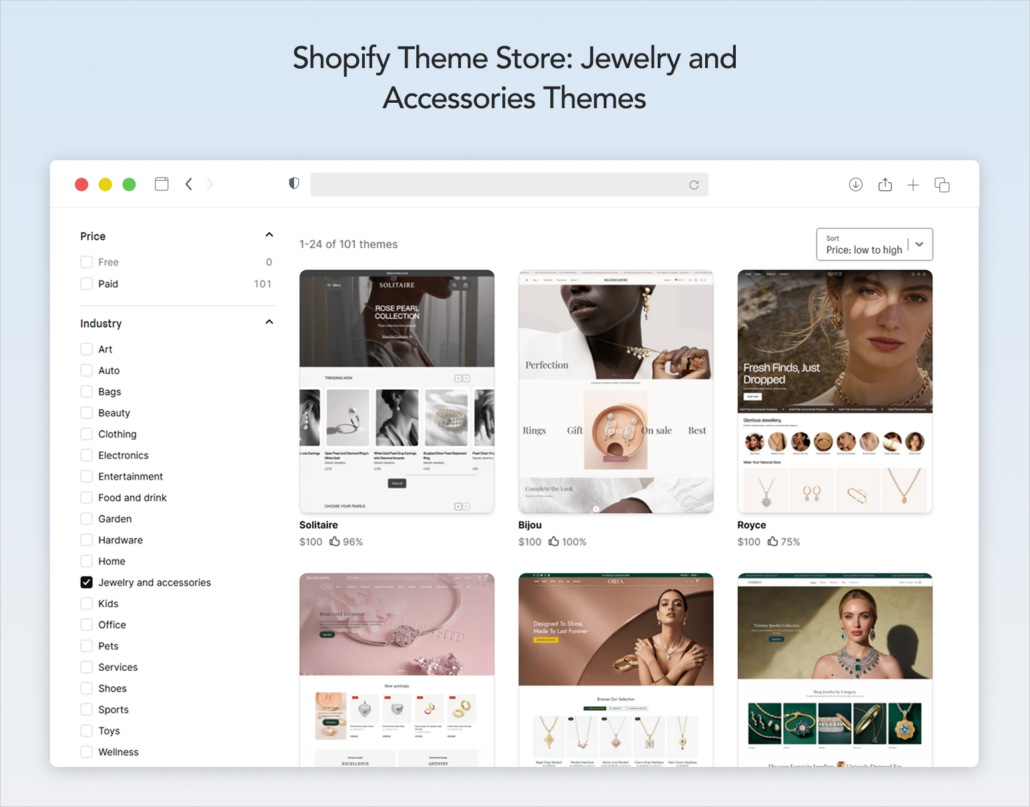
Shopify is the best website CMS for jewelers that:
Shopify is not an option if the store needs complex product configurators, deep backend customization, or advanced B2B pricing.lti-channel selling, and reliable customer support, it helps you get your products in front of the right audience.

BigCommerce is a hosted ecommerce CMS for retailers that need built-in tools for catalog management, marketing, SEO, analytics, payments, and multichannel selling. These capabilities make BigCommerce an effective jewelry brand development platform for growing businesses.
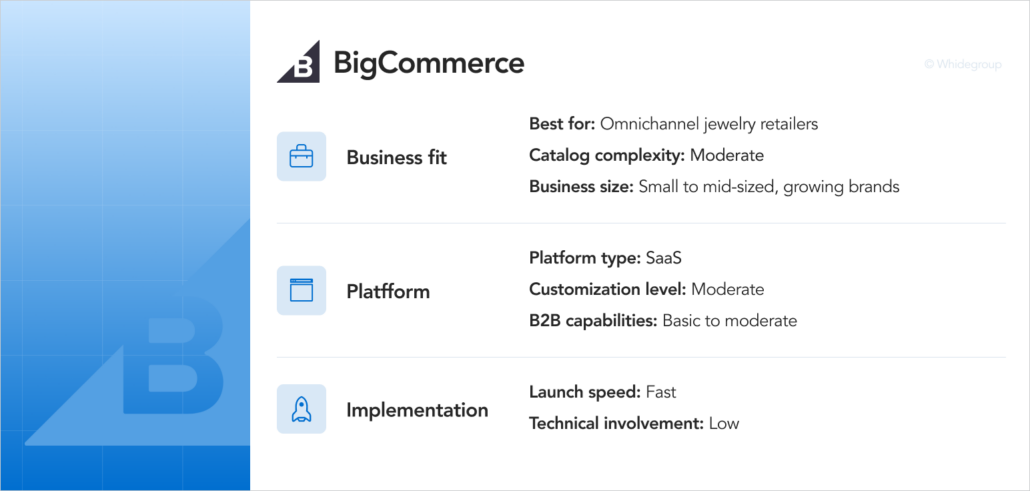
BigCommerce offers different payment plans depending on the level of online revenue of the business:
BigCommerce ensures scalability for expanding businesses that:
BigCommerce is not the best fit for jewelry businesses with complex custom product configurators, advanced B2B pricing, non-standard workflows, and deep back-end customization needs. In such cases, Whidegroup recommends considering Magento Open Source or Adobe Commerce.
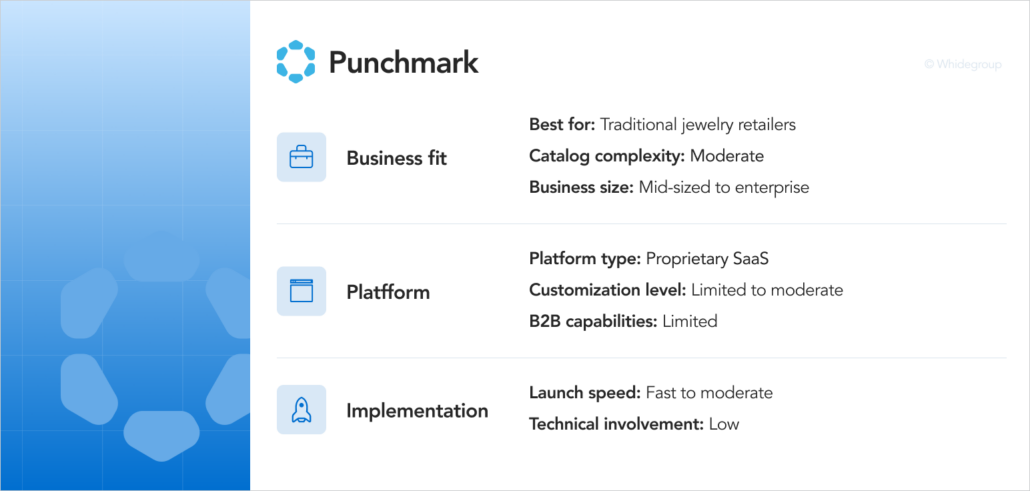
Punchmark is a website builder tailored specifically for the jewelry industry. From layout to marketing integrations, Punchmark’s platform is built to meet the unique needs of jewelers.
Punchmark offers three subscription plans for jewelry businesses:
In addition to monthly subscription fees, businesses can choose from several website design options:
Additional costs apply for custom integrations, specialized functionality, marketing services, concierge support, and other business-specific requirements.
Punchmark is an effective ecommerce platform for jewelry businesses that:
At the same time, Punchmark is not an option for companies that need full custom development freedom, plan complex international, B2B, or multi-brand operations, and want to avoid vendor dependency.
At the beginning of this guide, we outlined the factors that influence platform selection. Now it is time to apply that framework to your own business. To determine what is the best website builder for a jewelry store, gather your requirements by answering the following questions:
When you formulate your answers, the table below helps you choose the right platform.
| If your jewelry business needs… | Consider… | Why |
|---|---|---|
| Minimal technical maintenance and predictable infrastructure management. | Shopify or BigCommerce | Both platforms manage hosting, security updates, and core platform maintenance on behalf of merchants. |
| A simple catalog today but plans for advanced product customization in the future. | Magento Open Source | Starting with a flexible open-source platform can reduce future migration costs as business requirements become more complex. |
| Fast launch, simple catalog, visual storefront, and easy daily management. | Shopify | Shopify provides a hosted platform, jewelry-oriented themes, and a large ecosystem of ready-made apps. |
| Multichannel selling across marketplaces, social platforms, and physical locations. | BigCommerce | BigCommerce includes built-in multichannel capabilities and convenience POS functionality. |
| Complex product catalogs, custom jewelry configurators, B2B sales, and deep integrations. | Magento Open Source or Adobe Commerce | Magento provides extensive control over catalog structure, back-end logic, integrations, and custom development. |
| Content-focused marketing, SEO control, and lower initial costs. | WooCommerce | WooCommerce combines ecommerce functionality with WordPress content management. |
| Built-in jewelry-specific tools such as diamond search and engagement ring builders. | Punchmark | Punchmark focuses exclusively on jewelry retailers and includes industry-specific functionality out of the box. |
| Multiple brands, regional storefronts, or separate B2C and B2B websites. | Magento Open Source or Adobe Commerce | Magento’s multi-store architecture supports centralized management of multiple storefronts from a single backend. |
Before you decide
Since no platform is without drawbacks, keep these points in mind before you commit:
When evaluating your options, consider not only your business requirements but also the customer expectations shaping online jewelry buying. To make a more informed decision, explore our guide to Jewelry ecommerce trends.
The right decision about the best website builder for your jewelry business comes from matching platform capabilities with your catalog complexity, sales channels, and internal resources. SaaS platforms simplify launch and daily management, while open-source systems provide more control over complex product structures and integrations.
Before committing, evaluate not only initial setup costs but also long-term development, maintenance, and scaling requirements. The platform that feels easiest at launch is not always the one that performs best as your business expands.
Need help choosing the right platform for your jewelry business? Contact Whidegroup for a personalized consultation. We’ll help you select the perfect platform, providing setup and customization assistance.
Shopify is often the best option for small businesses with a simple catalog and standard jewelry sales process. The platform offers fast setup, easy store management, and a wide range of jewelry-focused themes and apps.
WooCommerce is a good alternative if you already use WordPress and need stronger content control.
Magento (Adobe Commerce or Open Source) is usually the strongest choice for jewelry businesses with wholesale or B2B needs. It supports customer groups, custom pricing, and complex account structures better than most SaaS platforms.
For simpler wholesale models, BigCommerce or Shopify Plus may also be enough, depending on the required pricing logic and integrations.
For custom jewelry, Magento is usually the stronger option because it supports complex product configurations, advanced variants, and custom pricing rules. Shopify can handle basic variations, but advanced configurators usually require apps or custom development that is limited on this platform.
Magento is not too complex when a jewelry store needs advanced catalog management, custom configurations, B2B features, or multi-store operations. However, for small stores with simple products and standard ecommerce needs, Magento may be excessive in both development and maintenance costs.
Shopify is enough for many jewelry businesses, especially D2C brands with simple to moderate product structures. At the same time, Shopify may be limiting for advanced product customization, B2B pricing, or deep back-end logic.
Punchmark can work better for jewelry retailers that require built-in industry tools like diamond search and engagement ring builders. However, general platforms like Magento or Shopify offer more flexibility and a larger ecosystem for scaling and integrations.
There is no fixed price for a jewelry ecommerce platform: the cost depends on the platform type, integration requirements, and customization level.
• SaaS platforms usually start with monthly subscription fees, while open-source solutions may require separate spending on hosting, development, maintenance, and technical support.
The main factors influence the total cost are:
• Platform fees: monthly subscriptions for SaaS platforms, infrastructure costs for open-source setups, or licensing costs for enterprise solutions.
• Themes, apps, and extensions: paid designs, third-party apps, payment gateways, marketing tools, jewelry-specific functionality, etc.
• Custom development: ring builders, advanced B2B functionality, integrations with ERP, CRM, PIM, or POS systems, custom checkout logic, or non-standard business workflows.
• Maintenance and support: ongoing updates, security monitoring, bug fixes, performance optimization, and technical support.
Additional expenses may include domain registration, content creation, product photography, SEO services, and transaction fees charged by payment providers or ecommerce platforms.
Yes, some platforms offer free plans, but they come with limits on ecommerce features, payment options, design flexibility, marketing tools, support, or custom domain use.
Free options may work for testing an idea. However, jewelers who want to create a professional store usually need a paid plan or a properly developed open-source solution.


 10+ Surefire Ways on How to Drive Traffic to a Shopify Store: a Comprehensive...