Magento 2 Checkout vs. Hyvä React Checkout: Should You Switch and When?
 8 mins read
 8 mins read
If your Magento 2 checkout feels slow, the issue usually comes from poor setup, not the platform itself.
Many vendors will suggest replacing the default Magento checkout with their own paid solution. However, at Whidegroup, after 14+ years of working with Magento, we ask a simple question: why pay more if optimization may fix the problem?
Every Magento website, including its checkout page – even paid alternatives – requires ongoing developer support. In most cases, you don’t need to replace the checkout. Instead, Magento maintenance experts can optimize performance and fix underlying issues.

Learn how Whidegroup improves Core Web Vitals and page loading speed.
In the few cases where replacement makes sense, we recommend Hyvä React Checkout. Still, as with any Luma-based checkout, there’s an important nuance. No checkout is a magic pill for speed, especially when the page contains heavy custom functionality.
But let’s take it step by step.
Factor
Default Magento 2 Checkout
Hyvä React Checkout
Cost
Default Magento 2 Checkout
Free; available out of the box.
Hyvä React Checkout
Extension is free but requires hiring Hyvä developers.
Performance
Default Magento 2 Checkout
Average PSI score of 50; can reach higher marks with expert optimization.
Hyvä React Checkout
Faster speed out of the box; still needs optimization if heavily customized.
Customization
Default Magento 2 Checkout
Complex and time-consuming.
Hyvä React Checkout
Easier and faster to customize.
Design and UX
Default Magento 2 Checkout
Functional but basic; lacks modern elegance.
Hyvä React Checkout
Modern, clean, and stylish appearance.
Third-party compatibility
Default Magento 2 Checkout
High; serves as the standard for most extensions.
Hyvä React Checkout
Limited; requires GraphQL API support.
Maintenance
Default Magento 2 Checkout
Needs ongoing work for highly custom settings.
Hyvä React Checkout
Easier to optimize complex changes.
Best fit
Default Magento 2 Checkout
Existing stores on Luma themes.
Hyvä React Checkout
New stores or those migrating to Hyvä.
Many merchants still believe the default Magento checkout is slow, clunky, and spread across multiple steps. That perception often leads to fears of high cart abandonment, as customers may not have the patience to complete the purchase.
This belief had merit years ago, but Magento has evolved. In 2026, the platform includes a one-page checkout in Magento 2 by default, which is much better suited for today’s shoppers.
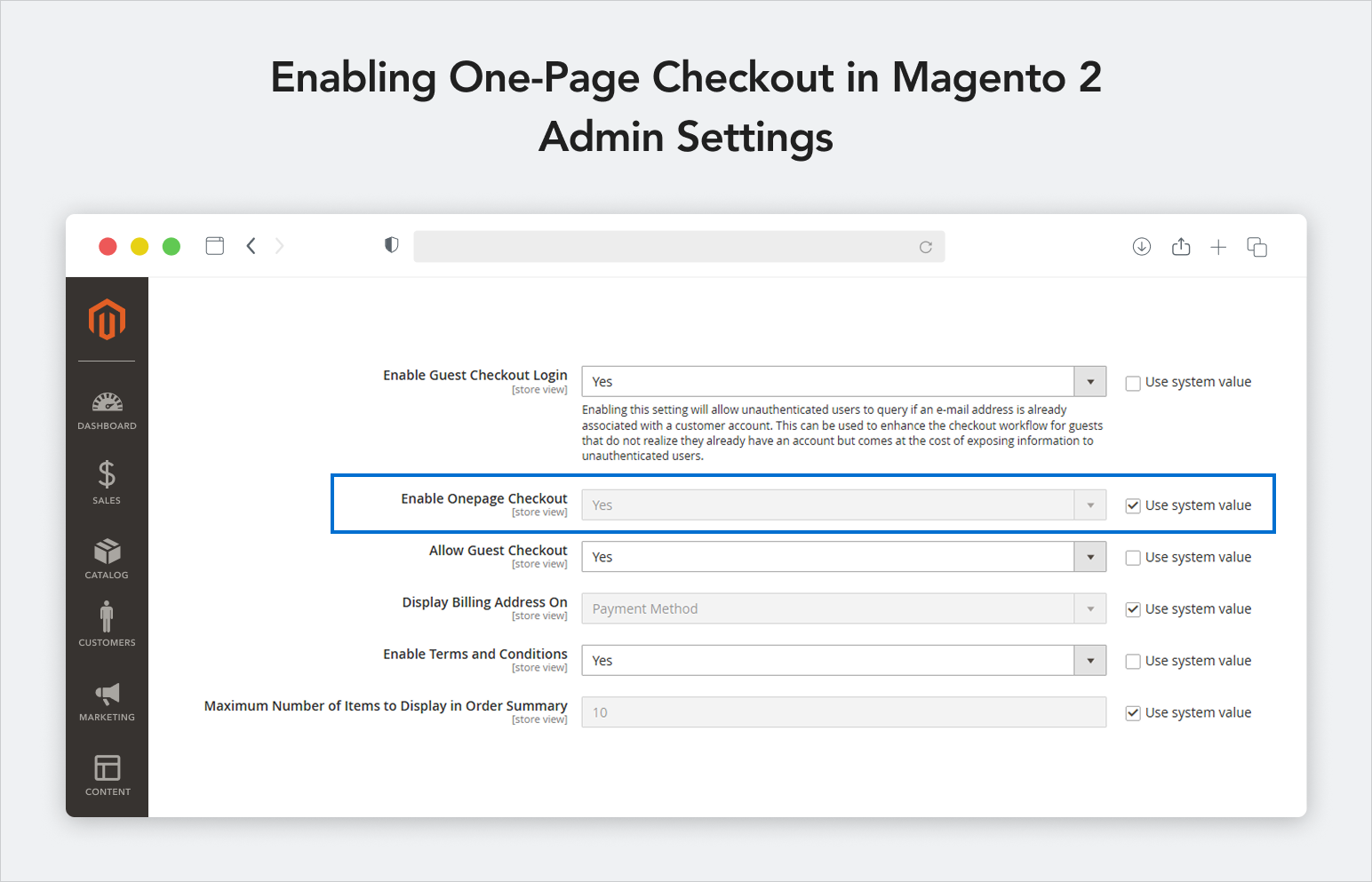
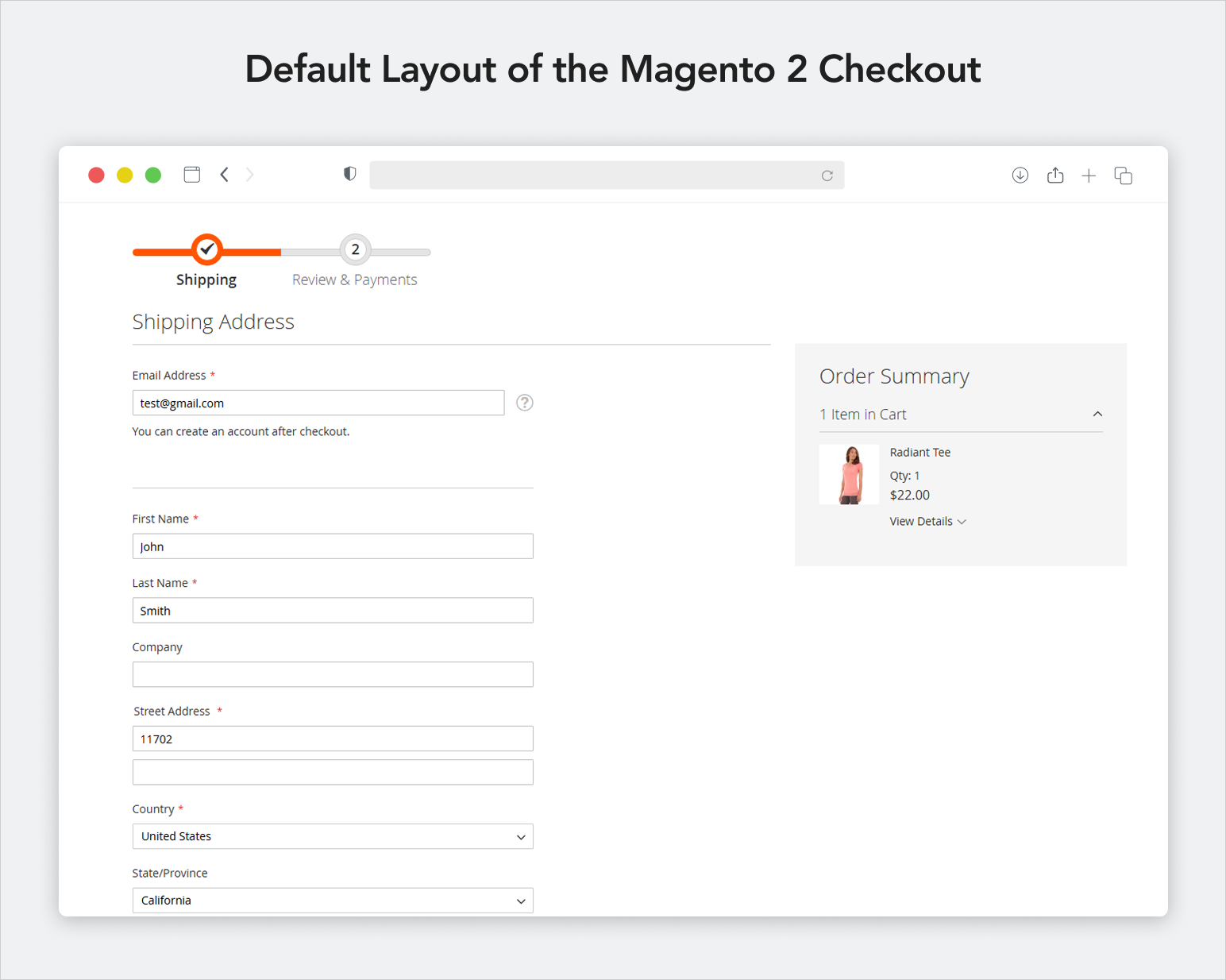
Yes, the checkout process has two steps, but both are completed on the same page without any reloads or redirects. Each step includes only the essential fields, along with clear visual cues that guide the buyer through checkout, reducing cart abandonment rates and increasing conversion rates.
If your business needs all checkout details collected in one step, Whidegroup developers can build this flow for you. We already implemented it for one of our long-term clients, allowing their shoppers to view shipping information and payment methods on one screen, completing purchases without extra clicks.
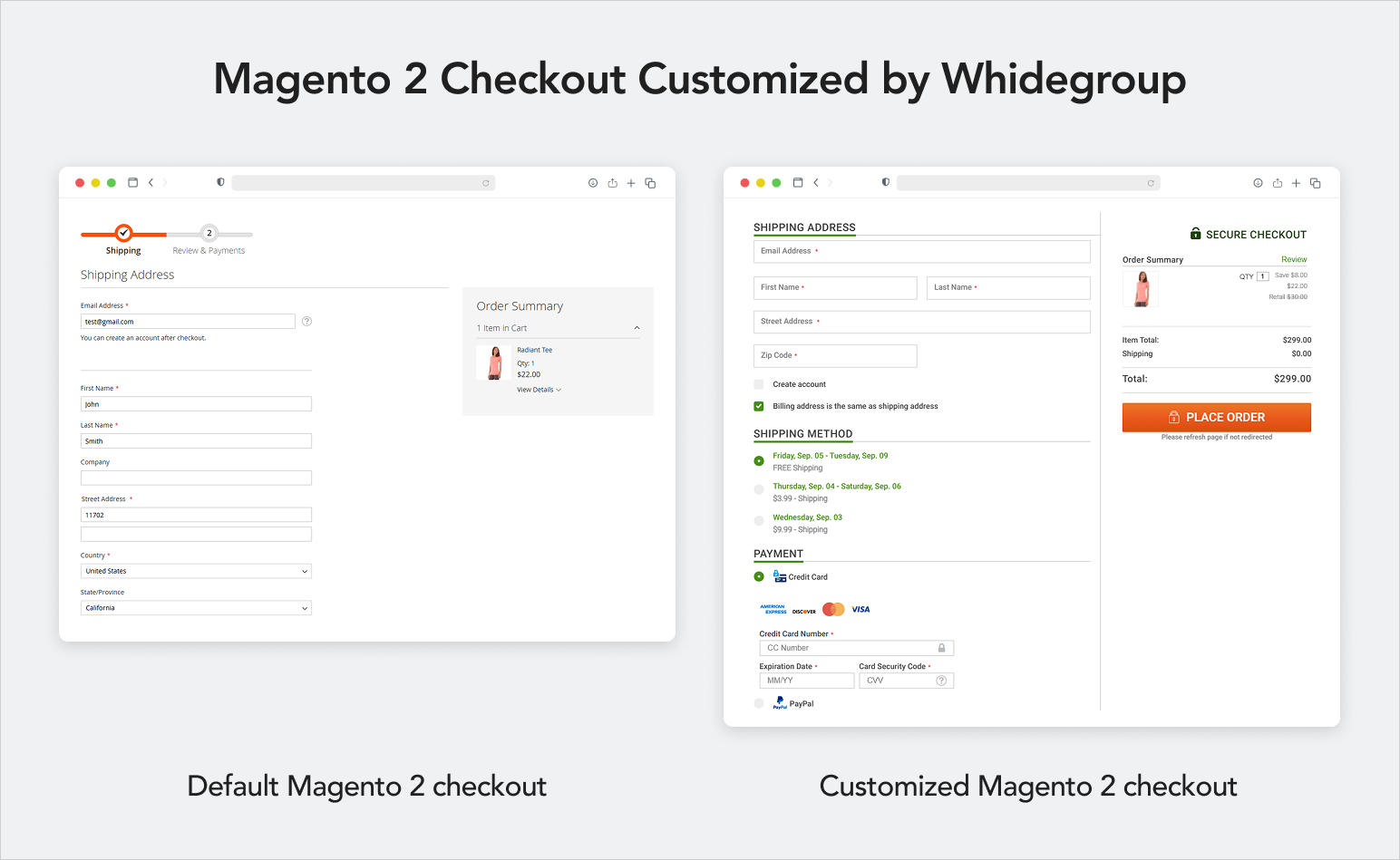
The default Magento checkout offers solid stability and basic functionality, yet certain limitations can affect speed and customer experience.
The modern Magento one-page checkout includes the core features most merchants expect from a third-party checkout solution:
But the default checkout also offers advantages paid extensions do not. It’s free and available out of the box.
Checkout speed is another factor that directly affects user experience and Core Web Vitals (CWV). According to PageSpeed Insights (PSI), the default Magento checkout scores around 50 on average. This result falls below the green zone, which requires a score of 90 or higher.
That’s why merchants consider turning to paid alternatives, but known solutions typically score between 40 and 70. Consequently, third-party checkouts fail to meet Google’s highest performance standards as well as default Magento checkout.
Despite its stability, Magento one-page checkout has several limitations:
From our experience at Whidegroup, most Magento checkout problems can be fixed without replacing the default system. Keeping the default Magento checkout makes sense when:
What if you’re launching a new store or migrating from another ecommerce platform and already know you’ll need extensive customization? In such cases, the Hyvä React Checkout is a stronger choice.
Hyvä React Checkout isn’t just one-page, it’s also one-step, meaning all the required information appears on a single screen.
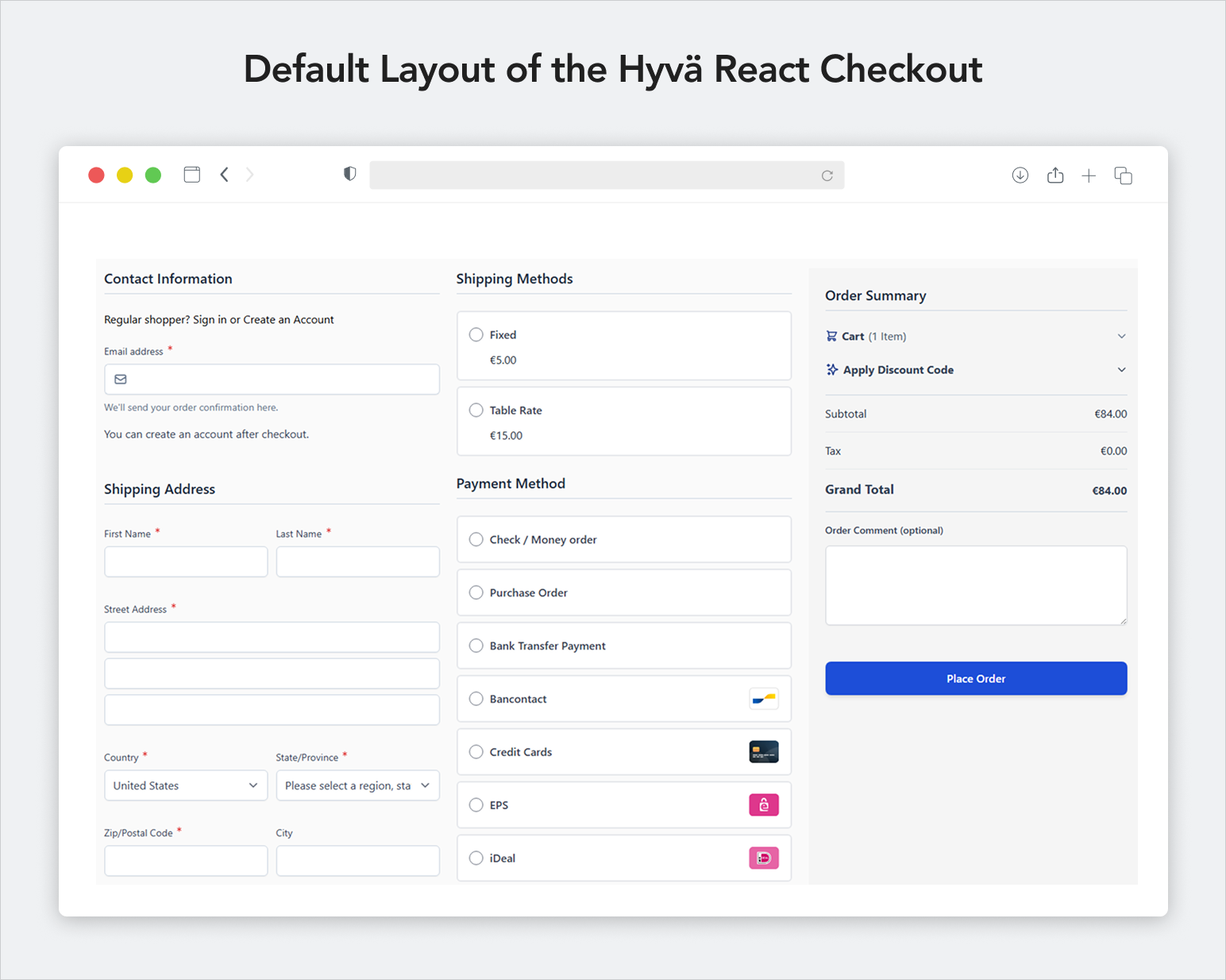
Still, if you and your customers prefer the traditional two-step checkout flow, that option is available as well. For example, the Whidegroup team implemented a customized two-step Hyvä React Checkout for Lichtnelke, our client in Germany.
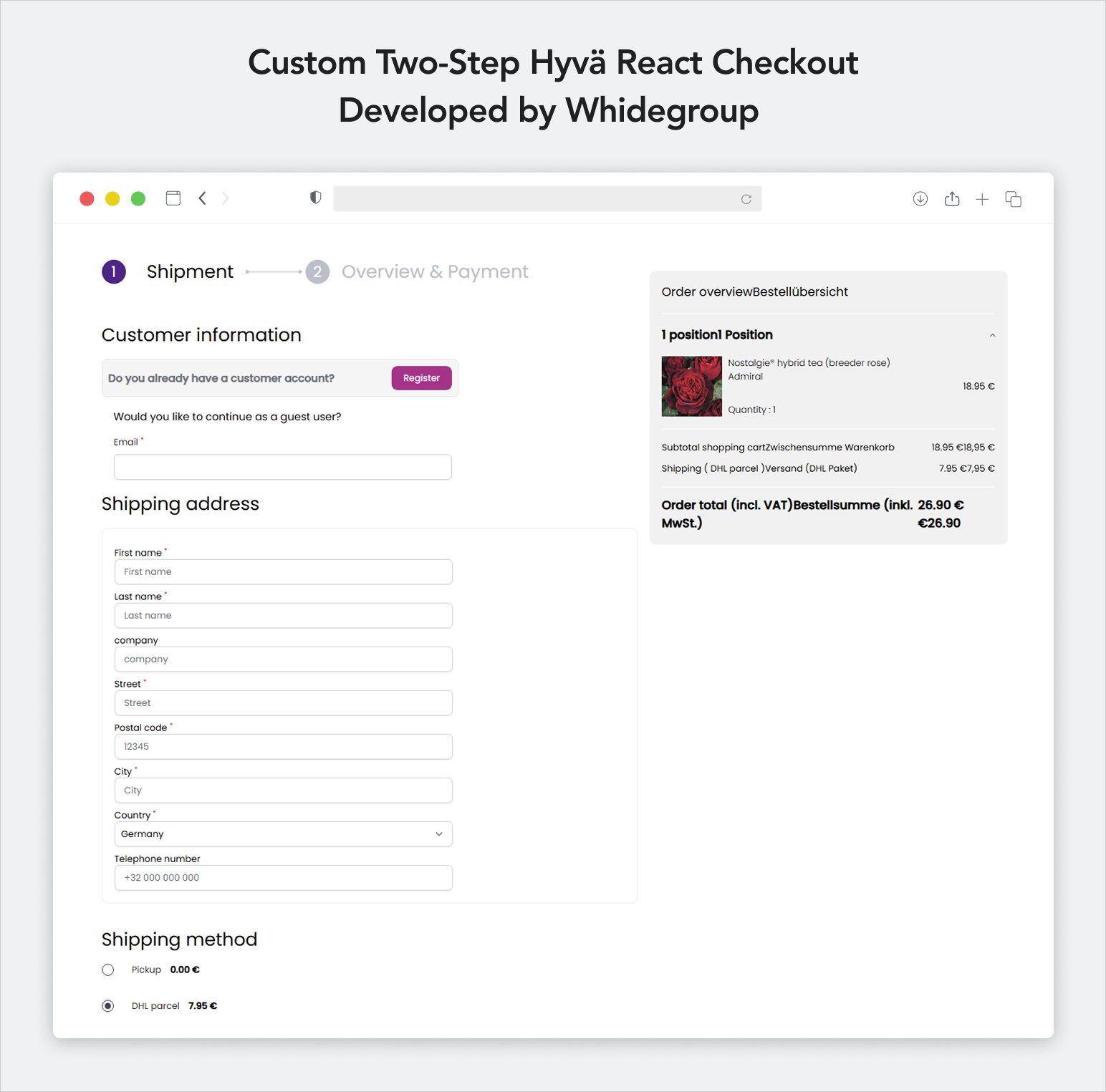
Let’s take a closer look at how React Checkout differs from the regular Magento one-page checkout.
React Checkout addresses the key shortcomings of default Magento 2 checkout by offering:
React Checkout is built with React.js and Tailwind CSS, which creates some limitations for Luma-based Magento 2 stores:
It’s possible to optimize even complex customizations built on React Checkout, just as with the default Magento checkout. Which option will be more profitable in the long run depends on your specific case. In most scenarios, Whidegroup experts recommend optimizing the existing checkout rather than migrating.

We’ll assess your frontend, extensions, and checkout logic before implementation.
Based on the points above, the main cases for choosing React Checkout, from a Whidegroup perspective, are:

If you’re facing performance issues on the checkout stage, don’t rush into a checkout switch. We recommend performing a website audit to identify the root cause of your problems first. However, if your goal is advanced UX and a streamlined checkout experience as part of a platform migration, Hyvä React Checkout is a powerful solution.
Ultimately, the best choice depends on your specific needs, budget, and future business goals. When you need expert advice, feel free to contact Whidegroup to discuss the best path forward for your store.
React Checkout is an alternative checkout solution, built with React.js and Tailwind CSS. It replaces the standard checkout with a faster, more flexible, and modern interface. Merchants choose it when they need custom checkout flows or want a lightweight option compared to the default Magento checkout.
No. Hyvä React Checkout works independently of the Hyvä Theme. You can integrate it with Luma or other Magento themes as well. However, combining it with the Hyvä Theme provides a more consistent frontend experience and stronger performance results.
Hyvä React Checkout can be faster and more responsive than default checkout because it uses a lighter frontend stack. However, performance depends on your store setup. If custom code slows down the default checkout, a proper Magento audit followed by website performance optimization can deliver similar results without migration.
It can, but with limitations. React Checkout relies on GraphQL API, so checkout-related third-party extensions must support GraphQL to work properly. Before switching, you should check compatibility with the modules your store relies on. Otherwise, additional development may be required to integrate them.
Default Magento 2 checkout is mobile-responsive, but Hyvä React Checkout takes it further. Built with a mobile-first approach, it delivers a cleaner interface, faster load times, and smoother interactions on smartphones and tablets.
Yes. At Whidegroup, we evaluate your store setup, extensions, and growth plans to recommend the best option. Sometimes optimizing the default checkout is more cost-effective, while in other cases, Hyvä React Checkout brings a stronger long-term advantage.


 Hyvä Theme Migration Guide: When to Switch and What to Expect