7+ Best Magento Hosting Solutions
for Real Businesses, not Enterprise Empires
 15 mins read

7+ Best Magento Hosting Solutions
for Real Businesses, not Enterprise Empires
15 mins readMagento places high demands on server resources, so most low-cost hosting plans fail under real store workloads. This doesn’t mean choosing the best Magento hosting for your store should be necessarily expensive. This means hosting should be evaluated against Magento’s technical requirements, not marketing promises.
We’ve supported hundreds of Magento stores, from small catalogs to high-traffic marketplaces. Based on this experience, we explain which server metrics directly affect speed and stability, what features justify higher costs, and where spending more brings no return. We also share a selection of the best Magento hosting companies from Whidegroup’s perspective.

We’ll assess your setup and point you to the right solution
Magento requires a solid server foundation. Yes, even stores with a limited catalog and moderate traffic face this issue. A “simple” Magento store still relies on multiple backend services that constantly consume server resources, such as:
For this reason, a reliable Magento hosting solution must provide sufficient RAM and storage to support these services alongside your store data and active users.
Beyond core requirements, hosting must also meet operational and security expectations. CDN compatibility, PCI compliance, and modern security practices directly affect page speed and payment safety. These, in turn, influence customer trust and loyalty, and, consequently, your revenue.
Before comparing features, define the hosting model you plan to use: managed or unmanaged. Each option offers different levels of control, support, and maintenance involvement. Your decision should reflect how much server management your team can realistically handle, and what budget you can allocate for hosting.
For Magento requirements, the primary unmanaged hosting option is a dedicated server without preconfigured software. The evaluation focuses on hardware specifications and pricing. All other setup tasks remain your responsibility:
This hosting model offers two clear benefits:
However, the challenge lies in execution. You need a team with strong server and Magento infrastructure expertise to select the right configuration, maintain stability, and handle ongoing maintenance.
What this means for you
If the selected server doesn’t match your store’s actual needs, switching to another one later requires a full reconfiguration. And this again costs time and money.
In the next section we list minimum technical requirements to help you avoid unsuitable offers early. At the same time, Magento stores with higher traffic or custom logic often exceed these baselines.
For this reason, choosing a bare-metal setup works best when you select your Magento hosting option with an experienced specialist.
Talk to one of our Magento hosting specialists.
Managed hosting can be shared, VPS (virtual private server), dedicated, or cloud-based. Basic shared hosting lacks sufficient resources for Magento. Cloud hosting plans offer the most flexibility, especially for scaling during traffic peaks. But there is a catch.

Magento scaling is not automatic, even in the cloud. You can vertically scale a single instance only to a certain limit. Adding new instances still requires code changes, environment setup, and deployment of all required services. Because of this, cloud scaling often costs more time and money than expected. If you choose a cloud solution for scaling during peak periods you most likely know when those spikes will happen. Black Friday and seasonal sales don’t come as a surprise. This means you can plan capacity in advance. In my experience, it is more cost-effective to stay on dedicated hardware. You can add extra servers and configure them before peak periods arrive. Over a full year, this approach costs less than relying on popular cloud hosting services.
With managed hosting platforms, you rent not only server capacity, but also a bundle of services. These plans usually include a preconfigured software stack, security settings, and technical support. The exact feature set depends on the provider and selected plan, and not every managed offer fully aligns with Magento’s technical requirements.
Providers that specialize in Magento hosting services typically deliver the complete software environment required by Magento. Beyond server management, they also handle Magento-related issues.
The main drawback is cost. Managed hosting costs more than renting a bare server, while Magento-focused plans sit at an even higher price point due to deep platform expertise and support.
Here, we list the core parameters that matter when comparing Magento hosting offers. These benchmarks show which options deliver performance and which could create risks.
Hardware directly affects store speed, stability, and behavior during traffic peaks.
The figures below represent minimum viable levels. Your store can require more capacity based on traffic, catalog size, and custom logic. Use these numbers as a baseline to filter out unsuitable options for Magento.
Keep in mind that some providers promote “Magento hosting” plans with lower limits. In practice, these configurations cause slow response times and lead to recurring outages.
Security features typically come with managed hosting plans. Some protections, such as DDoS mitigation, may also be included with bare-metal servers, but responsibility then shifts to your internal team.
Regardless of the hosting model, either the Magento hosting provider or your support team should cover the following areas:

Protect your revenue and reputation with our specialized Magento security services!
Price comparison should include contractual and operational conditions, not just plan cost. Evaluate:
Support scope varies across managed hosting providers. Pay attention to:

Ensure uptime, speed, and reliability with our expert team.
Below, we present top Magento hosting solutions handpicked by the Whidegroup team. With 14 years of Magento experience, we’ve evaluated different hosting features that truly matter for stable store operation.
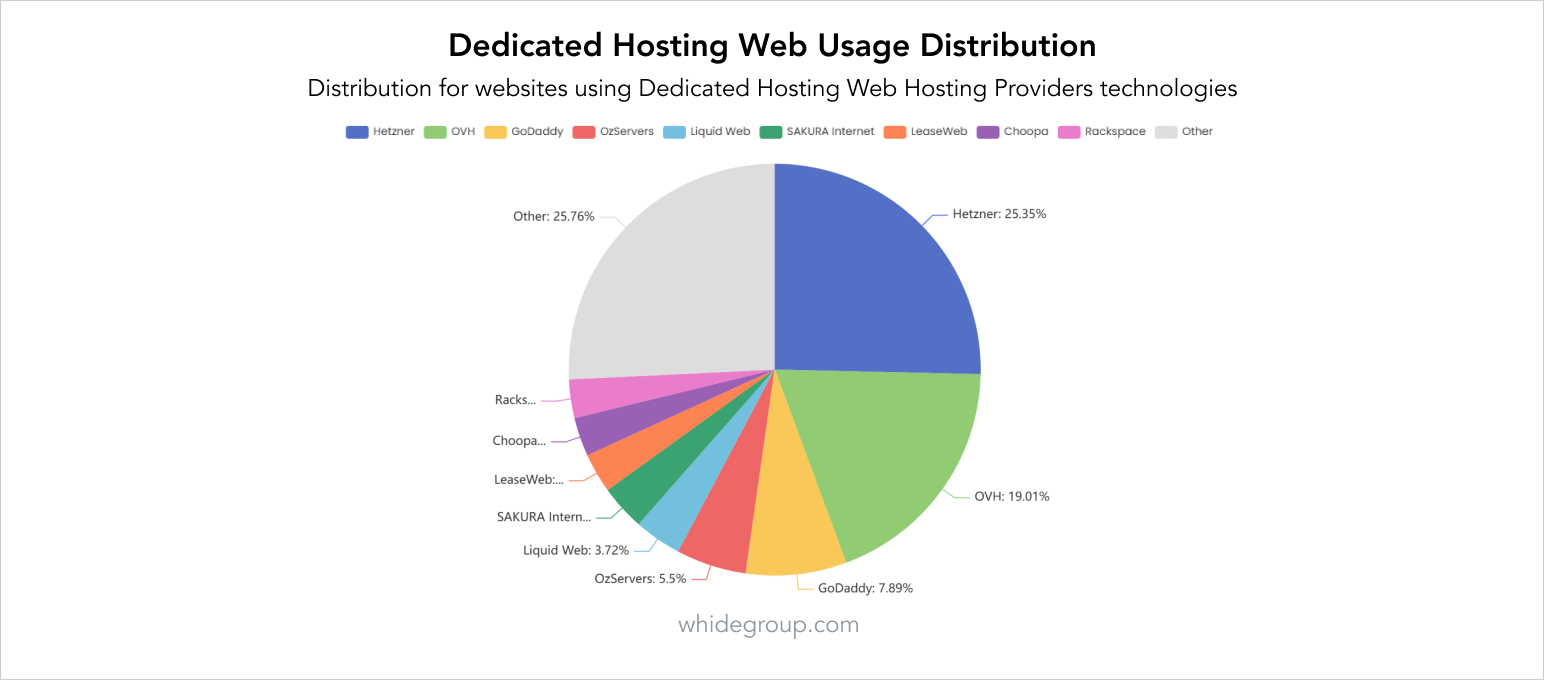
Hetzner rarely appears in mainstream “best Magento hosting” roundups, yet it consistently delivers one of the strongest price-to-performance ratios on the market. This recommendation isn’t driven by affiliate programs. It’s based on our hands-on experience. According to BuiltWith data, Hetzner is the most widely used dedicated hosting provider as of early 2026.
In addition to strong infrastructure, Hetzner emphasizes sustainability. All company-operated data centers run on renewable energy sources.
The Whidegroup team relies on Hetzner bare-metal servers. It also offers managed plans, but they don’t include Magento-focused support. That responsibility stays with your internal team or Magento service partners.
Whidegroup has well-tested processes for monitoring, backups, and scaling on Hetzner. Thanks to our experience, we can deploy backups faster than most teams running Magento on AWS. To be clear: a top-tier AWS architect will do it faster, but those experts rarely manage small-to-medium Magento projects.
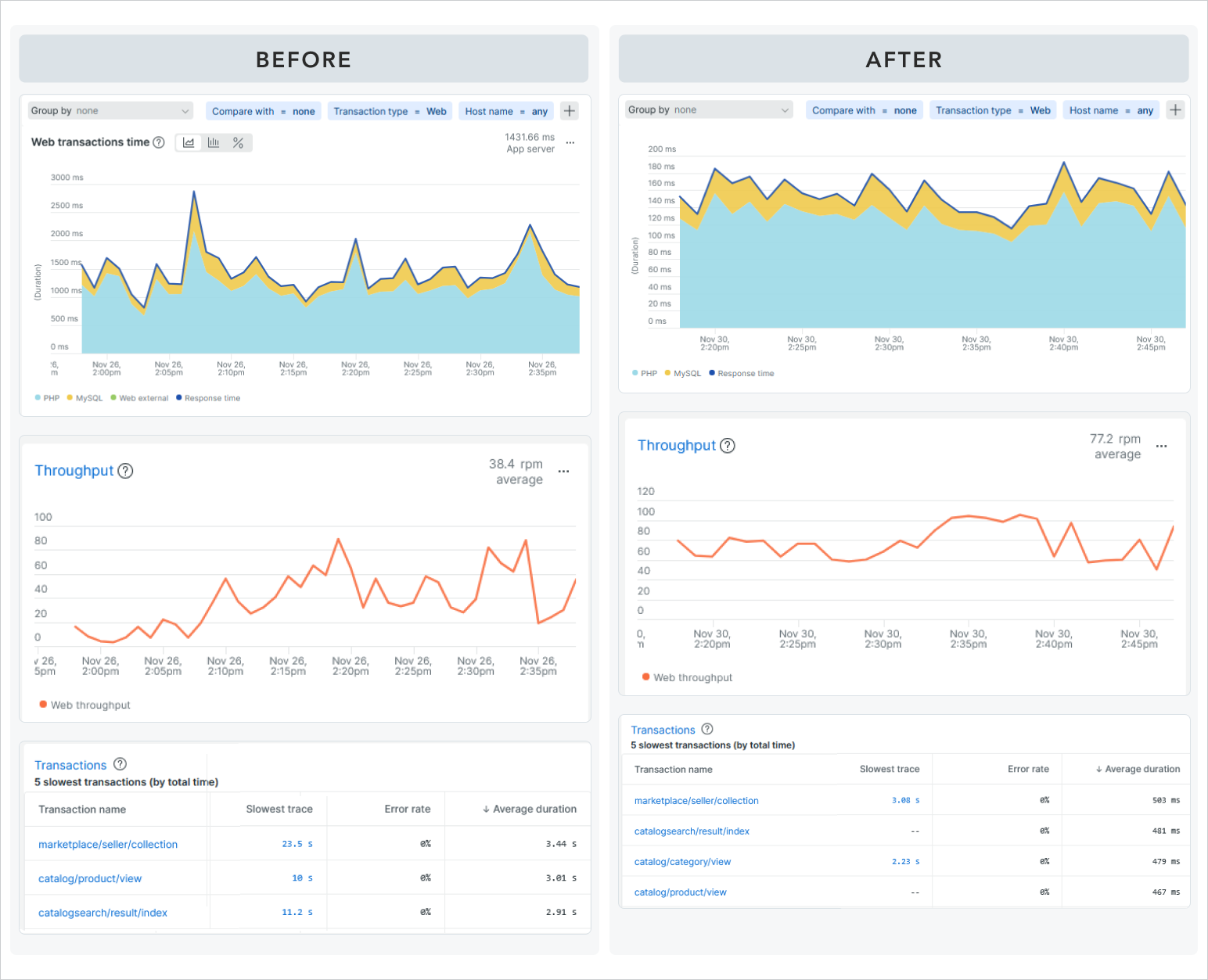
We recently completed migrations for two Magento stores on this web hosting provider.
Notably, these performance gains came alongside lower infrastructure costs.

Nexcess is a specialized hosting provider for Magento that previously operated as a standalone company. It’s now part of Liquid Web. Despite the merger, Nexcess offers hosting plans built specifically for Magento stores.
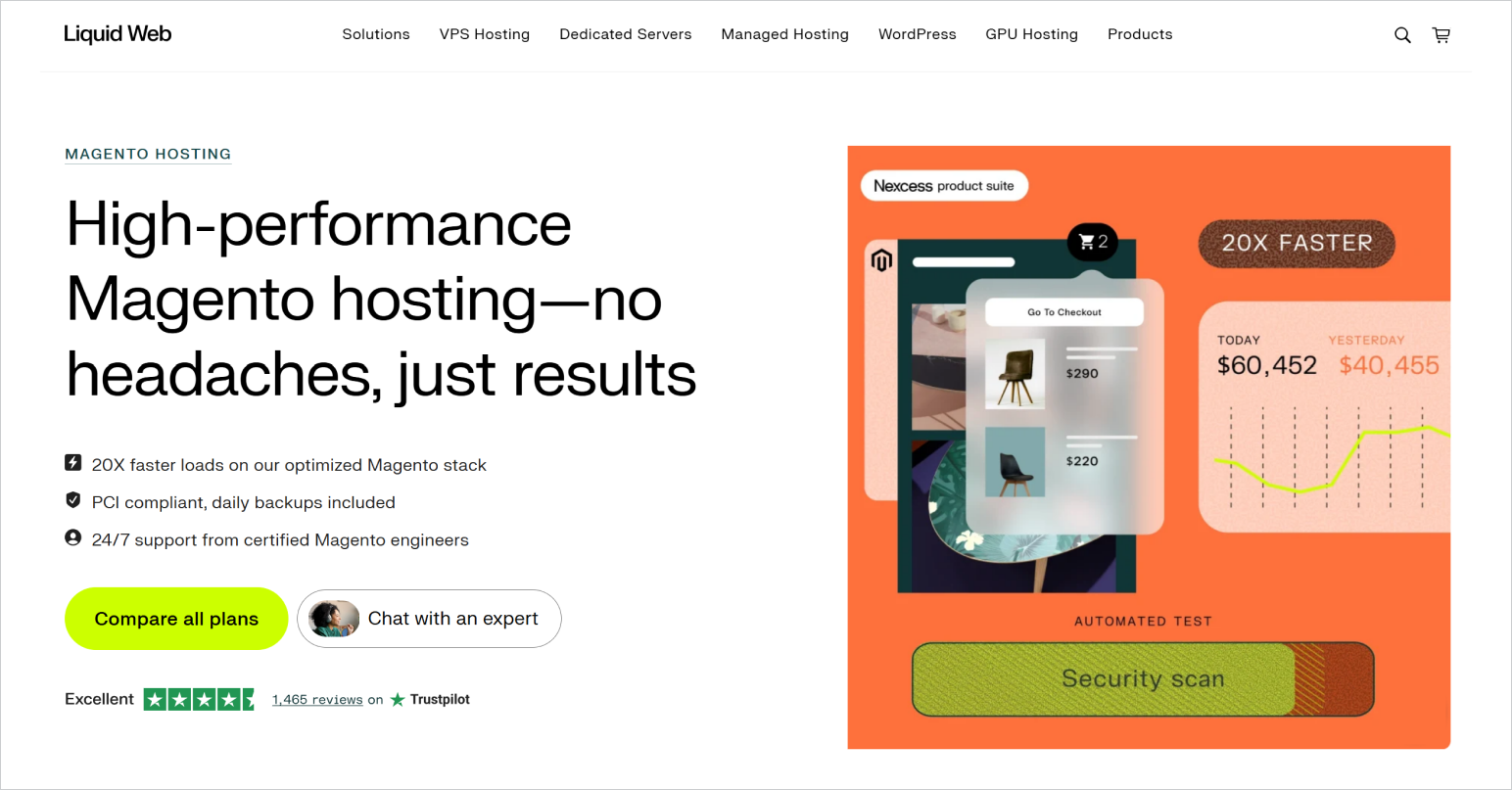
As a fully managed Magento hosting solution, Nexcess operates at a higher price point than average hosting services. In return, the company promotes an optimized Magento stack with up to 20× faster load times and 24/7 access to certified Magento engineers.
Other benefits of Magento hosting service by Nexcess:
For merchants who prefer full control, Liquid Web also provides bare-metal server options outside of managed plans.
Cloudways is a well-known provider of managed cloud hosting for Magento. It runs on infrastructure from DigitalOcean, Amazon Web Services, Google Cloud, and other vendors, adding its own management and service layer.
Cloudway services include:
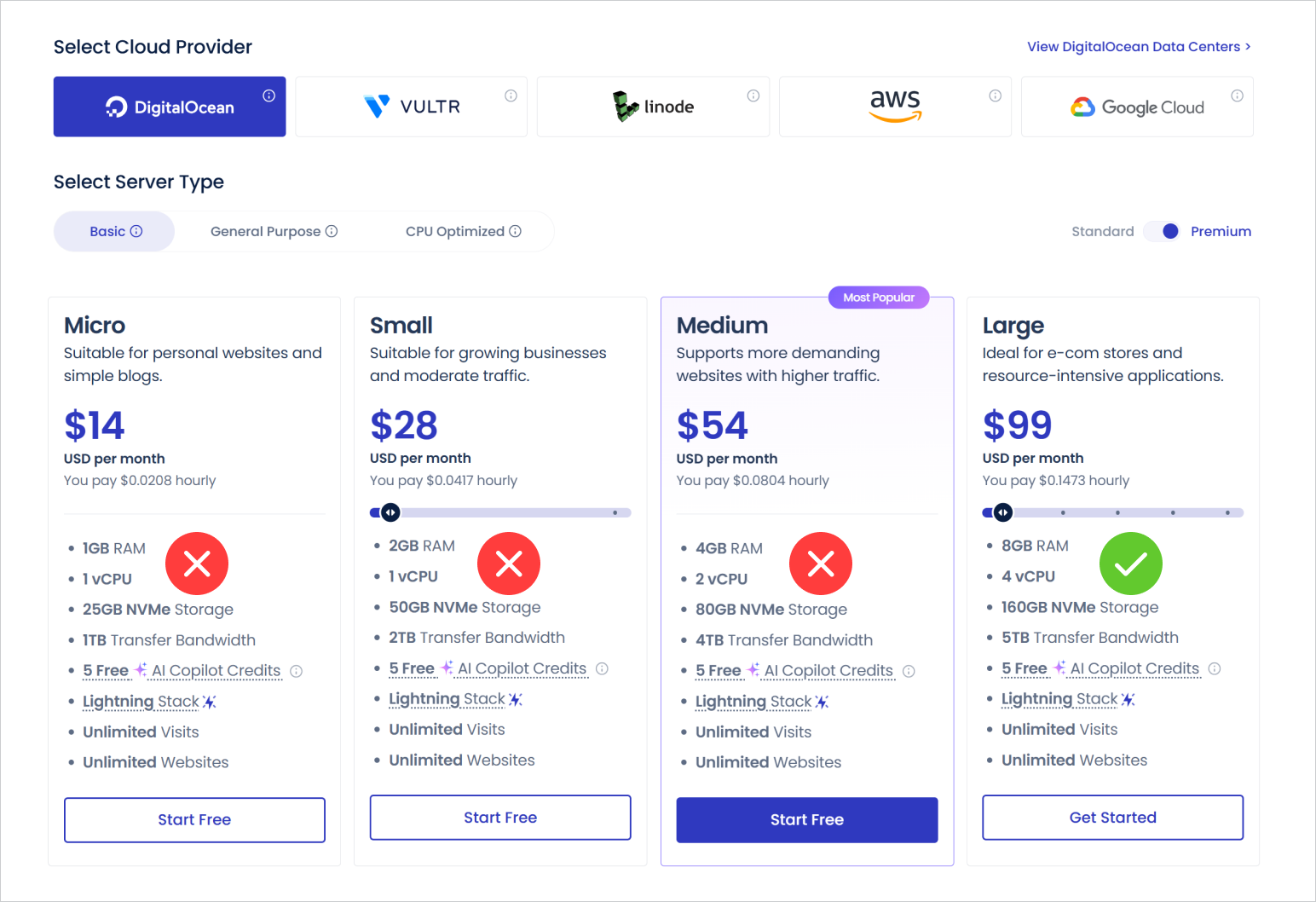
Cloudways offers managed Magento hosting plans. However, some tiers lack the resources Magento requires, so plan selection needs careful validation.
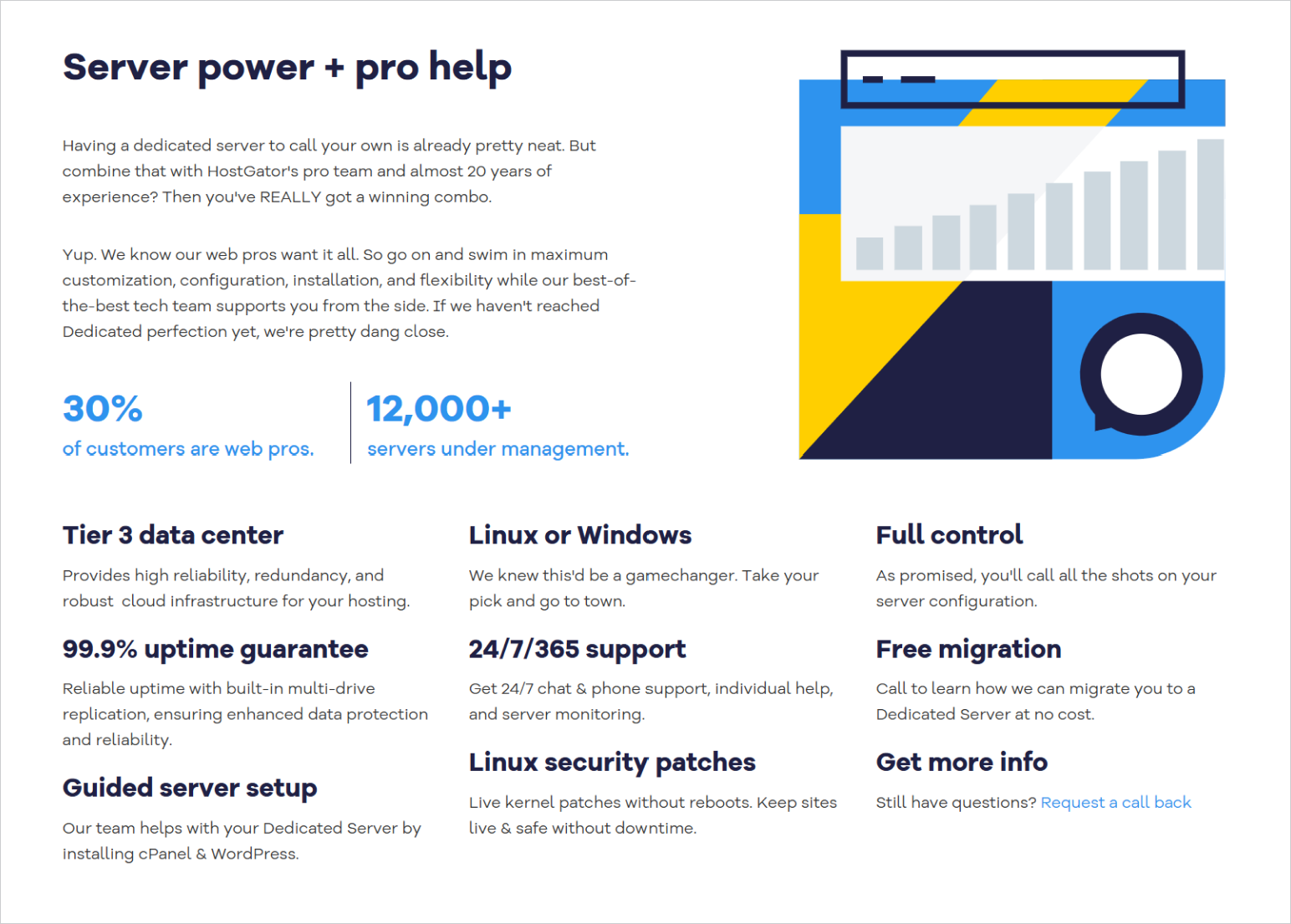
HostGator is one of the most established names in the hosting market. Founded in 2002, it’s a hosting provider that specializes in budget-friendly, all-in-one solutions aimed at beginners and small businesses.
For large Magento stores, HostGator becomes relevant at the dedicated server level. While its entry-level plans lack sufficient power, dedicated servers provide the resources required to run Magento. These hosting plans include infrastructure support backed by more than 20 years of operational experience.
Bluehost is a long-established hosting provider offering managed VPS plans and dedicated servers that can meet Magento’s technical requirements. While VPS plans come at a lower cost, they are primarily optimized for WordPress. As a result, your team must handle all Magento-related software setup on VPS and dedicated environments alike.
Dedicated hosting offers broader configuration options and full control over the server. For Magento projects, this makes dedicated servers the best choice.
All Bluehost plans include:
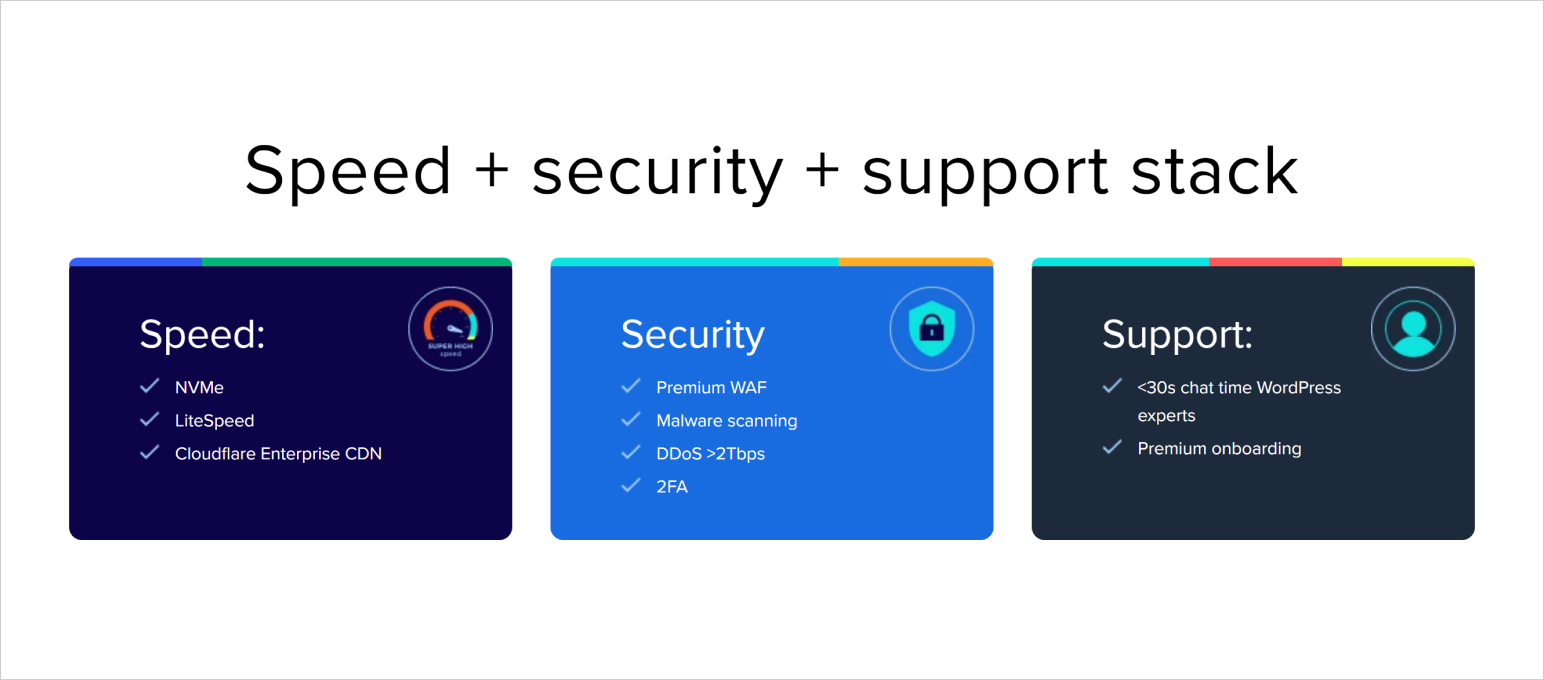
InMotion is often positioned as a professional-tier alternative to large corporate providers such as HostGator or Bluehost. The company is known for reliable hardware and responsive, human-led technical support.
InMotion offers bare-metal servers and VPS plans with premium support. It also provides custom VPS options starting around $30 per month, which can suit small and mid-sized businesses. With additional fees, InMotion’s system administrators handle the installation and configuration of required software.
All plans include:

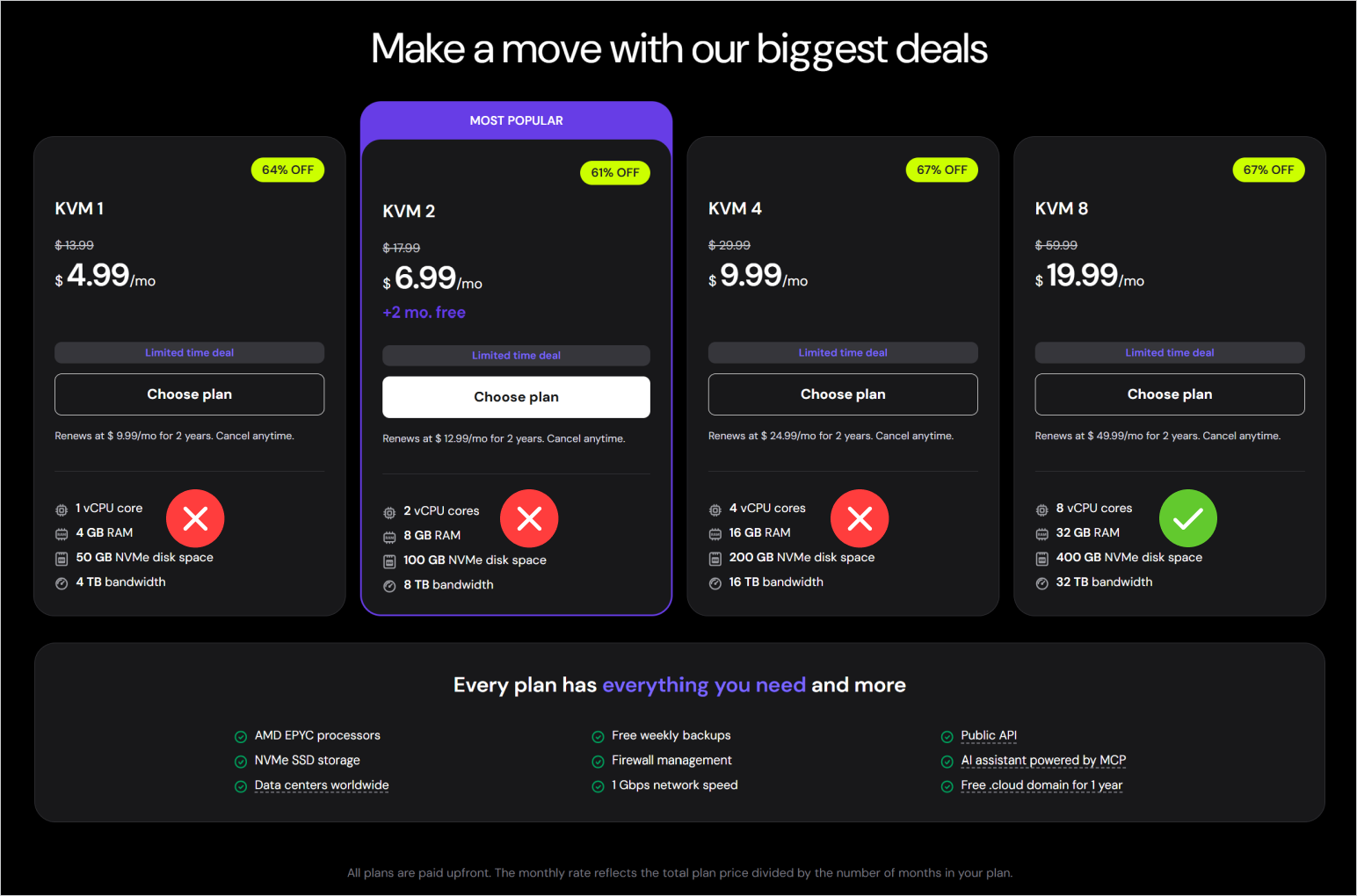
Hostinger may be a choice for Magento store owners with strict budget constraints. Its unmanaged highest-tier VPS plan meets the minimum technical requirements.
However, this capacity leaves little room for growth. Once the store outgrows the plan, scaling options are limited, and migration to another Magento hosting company becomes necessary.
Below, we present comparison tables that summarize offers from the best hosting providers. Managed and unmanaged options are listed separately, using the most affordable plans that still meet Magento performance requirements.
Provider
Hardware
Security
Other features
Price (per month)
Provider
HetznerHardware
16 vCPU 128 GB RAM 2 x 1.92 TB NVMe SSD 5.9 TB bandwidth 99.9% uptime guaranteeSecurity
Root access DDoS protection Firewall GDPR compliance (optional)Other features
Dedicated IP address No minimum contract term Cancellation period: immediatelyPrice (per month)
$116Provider
Liquid WebHardware
12 vCPU 32 GB RAM 2 x 960 GB storage NVMe SSD 10 TB bandwidth 99.99% uptime guaranteeSecurity
Root access DDoS protectionOther features
Dedicated IP address Upgrade of individual components, like RAM or storage Server-related support (optional)Price (per month)
$184Provider
HostGatorHardware
8 vCPU 32 GB RAM 1000 GB storage NVMe SSD Unlimited bandwidth 99.9% uptime guaranteeSecurity
Root access DDoS Protection SSL certificatesOther features
Staging environment 30-day money-back guarantee 24/7 server supportPrice (per month)
$144.19Provider
BlueHostHardware
8 vCPU 128 GB RAM 2 x 1.92 TB storage NVMe SSD 99.99% uptime guaranteeSecurity
Root access DDoS Protection Dedicated firewalls Malware scanning CDN add-on SSL certificates Automated backupsOther features
Staging environment 30-day money-back guarantee 24/7 server supportPrice (per month)
$144.19Provider
InMotionHardware
8 vCPU 128 GB RAM 2 x 1.92 TB storage NVMe SSD 99.99% uptime guaranteeSecurity
Root access DDoS Protection Multi-layer defenseOther features
16 Dedicated IPs 30-day money-back guarantee Upgradable hardware (optional)Price (per month)
$239.99Provider
HostingerHardware
8 vCPU 32 GB RAM 400 GB NVMe SSD 32 TB bandwidthSecurity
Automatic weekly backups Malware scanner Firewall management DDoS protectionOther features
Free cloud domain for 1 year Comprehensive documentation AI assistent 30-day money-back guaranteePrice (per month)
$19.99Provider
Hardware
Software and support
Security
Other features
Provider
Hetzner $88 (per month)Hardware
8 vCPU 64 GB RAM 2 x 512 GB NVMe SSD 5.9 TB bandwidth 99.9% uptimeSoftware and support
MariaDB Redis PHP 8 Custom software installer Support for hardware only Magento documentationSecurity
SSL encryption SSH access 24/7 monitoring Spam filter Virus filter DDoS protection Daily backup GDPR complianceOther features
No minimum contract term Cancellation period: immediately Up-/Downgrade hardware exchange possibilityProvider
Nexcess by Liquid Web $409 (per month)Hardware
20 vCPU 20 GB RAM 400 GB storage 5 TB bandwidth 99.99% uptimeSoftware and support
Fully prepared Magento stack Magento support teamSecurity
24/7 access to Magento experts SSH and SFTP access SSL encryption Built-in firewall Daily malware scans Daily backup PCI compliance Disaster recoveryOther features
Cloudflare CDN Migration from other server Autoscaling 30-day money-back guaranteeProvider
Cloudways $149 (per month)Hardware
8 vCPU 16 GB RAM 320 GB NVMe SSD 6 TB bandwidthSoftware and support
Fully prepared Magento stack Magento support teamSecurity
SSH and SFTP access SSL encryption Built-in firewall Server & App Monitoring Auto-healing feature IP Whitelisting Automated Backups (hourly to weekly) Two-Factor AuthenticationOther features
3-day trial Cloudflare CDN Free migration from other server Autoscaling Pay-as-you-go pricing Git IntegrationProvider
BlueHost $82.99 (per month)Hardware
8 vCPU 16 GB RAM 450 GB storage NVMe SSD ∞ bandwidth 99.9% uptimeSoftware and support
Primarily configurable for WordPress 24/7 expert support for server-related issuesSecurity
SSH and SFTP access Dedicated firewalls Malware scanning CDN add-on SSL certificates Automated backupsOther features
Free cPanel for first term Staging environment 2 dedicated IPs Free site migration tool 30-day money-back guaranteeProvider
InMotion $22.99 (per month)Hardware
8 vCPU 16 GB RAM 260 GB NVMe SSD ∞ bandwidth 99.99% uptimeSoftware and support
Supports all necessary software 24/7 human supportSecurity
DDoS protection Real-time malware scanningOther features
Launch assist and 24/7 support 3 Dedicated IPs Up to 90-day money-back guaranteeFrom a performance standpoint, a well-chosen Magento hosting provides faster page loads and consistent backend speed. This directly impacts how search engines and users perceive your store – a factor that, in turn, translates into revenue outcomes.
Google takes speed and core web vitals (CWV) metrics into account in its rankings. Magento 2 hosting that uses NVMe storage and advanced caching helps pages rank higher, bringing more qualified traffic.
Another bonus is ad efficiency. Google Ads rewards fast-loading landing pages with higher Quality Scores. This lowers your cost per click (CPC) and helps you use your marketing budget more efficiently.

We know how to speed up your store
Downtime is a silent revenue killer. If your store goes offline for a long enough period, you aren’t just losing current sales. What’s even worse, this damages customer trust and your brand reputation.
It’s exactly the reason to look for the best Magento hosting that provides at least 99.9% uptime guarantee. This way, your “Open” sign is always lit.
Data shows that a 1-second delay in page load time can lead up to a 20% drop in conversions. Modern Magento hosting services ensure that database-heavy tasks – such as checking stock levels or calculating delivery costs – are performed instantly. And fewer pauses mean fewer abandoned orders.
Many businesses shy away from the best magento hosting companies due to the monthly cost, but the total cost of ownership (TCO) tells a different story.
If you encounter the following red flags, it’s time to look for a better Magento 2 hosting.
Code can only go as fast as the processor allows. If your CPU is constantly throttled, visitors will experience sluggish page loads regardless of how “clean” your Magento instance is.
When your development team has already optimized images, minified CSS/JS, and cleaned up third-party modules, yet your Time to First Byte (TTFB) remains high, the issue is hardware-bound.
Shared or low-tier VPS environments often lack the PHP-FPM worker threads needed to process a surge of simultaneous requests.
If your store frequently returns 502 Bad Gateway or 504 Gateway Timeout errors during a newsletter blast or a holiday sale, your server’s concurrency limits have been reached.
Magento Open Source is database-intensive. Tasks like bulk price updates, index management, or generating reports shouldn’t take minutes. Scaling a Magento store involves handling an increased volume of concurrent database queries, parallel indexer processes, and high-frequency API calls (e.g., ERP or CRM syncs).
You hit a resource ceiling where your current CPU core count or RAM allocation cannot be increased without a full, manual migration to a new server.
This happens when a provider fails to maintain modern security standards, leaving you with outdated server environments, unpatched vulnerabilities, or insufficient monitoring. Such gaps increase your exposure to attacks and data breaches. Ultimately, a single security incident can outweigh the long-term cost of a more expensive managed Magento hosting.
The right hosting choice for Magento depends on your catalog complexity and the depth of your third-party integrations. At the same time, Magento has minimum hardware requirements. Because low-cost options like shared hosting don’t meet these minimum hardware needs, they cannot deliver stable Magento performance.
For most businesses, the gold standard of best Magento hosting is a bare-metal server or managed dedicated hosting. While a VPS might suffice for smaller setups, it should only be chosen after thorough resource auditing.
Unsure which hosting path to take? Remember – a professional consultation today is far cheaper than a forced migration tomorrow. Contact us to review your requirements and get expert recommendations for a suitable hosting setup.
Start with measurable data: daily traffic, peak concurrent users, catalog size, and the number of integrations running in real time. Performance logs from tools like New Relic help identify CPU, RAM, and database bottlenecks. For planning, always size hosting for peak load, not average traffic.
We allocate up to five days for a comprehensive Magento migration to ensure your store’s integrity. While the transfer can be completed faster, we dedicate this time to rigorous hardware testing and optimization. We believe a meticulous setup prevents future operational issues, whereas a rushed migration often leads to avoidable downtime.
If your project requires an urgent transition, we have pre-configured Magento servers ready for immediate deployment. Contact us to discuss your specific timeline.
Yes. We use staged migration with parallel environments. The live store continues operating while data syncs in the background. Final switching happens during low-traffic hours, which prevents downtime and protects active orders and customer sessions.
Managed Magento hosting can work if your team lacks server expertise. However, our 15 years of Magento experience shows a different long-term picture. A bare-metal server combined with professional Magento maintenance services delivers better performance and lower total costs over time.



 Digital Marketing for Jewelry Stores: Why Strategy Doesn’t Work Without a...





For 96% of Magento projects, the high cost of cloud solutions like AWS simply isn’t necessary. For ecommerce, their main strength is fast backups and rapid scaling. However, these benefits only work when the infrastructure is managed by highly experienced engineers. In practice, most teams don’t have that level of expertise. Most projects only require solid, standard hardware paired with competent administration, reliable backups, and continuous monitoring. We use bare-metal servers from trusted providers that deliver comparable hardware performance at more than three times lower cost than AWS.Anton Zhuk, Managing Director at Whidegroup