How to Start a Jewelry Business:
Challenges and Tips for Launching Your Online Store
 19 mins read
How to Start a Jewelry Business:
Challenges and Tips for Launching Your Online Store
19 mins readPlanning how to start an online jewelry store involves much more than attractive storefront design. Jewelry purchases are rarely impulsive or routine. Buyers compare gemstones closely, explore authenticity details, worry about sizing, and look for trust signals before spending large amounts online.
That’s why an online jewelry store must support immersive product presentation, personalization features, delivery transparency, and trust-focused UX across the entire website in addition to secure payments.
In this article, we break down the main technical and UX decisions behind successful store development based on Whidegroup experience with luxury ecommerce projects.
We develop jewelry stores that combine advanced product customization, secure checkout, and conversion-focused UX to drive high-value sales.
The global jewelry market is expected to grow at a CAGR of 5.5% and reach $578 billion by 2033. This growth offers great chances for success, but it also brings tough competition and higher demands from buyers. To help you prepare, we explain the main challenges you should consider before starting an online jewelry store.
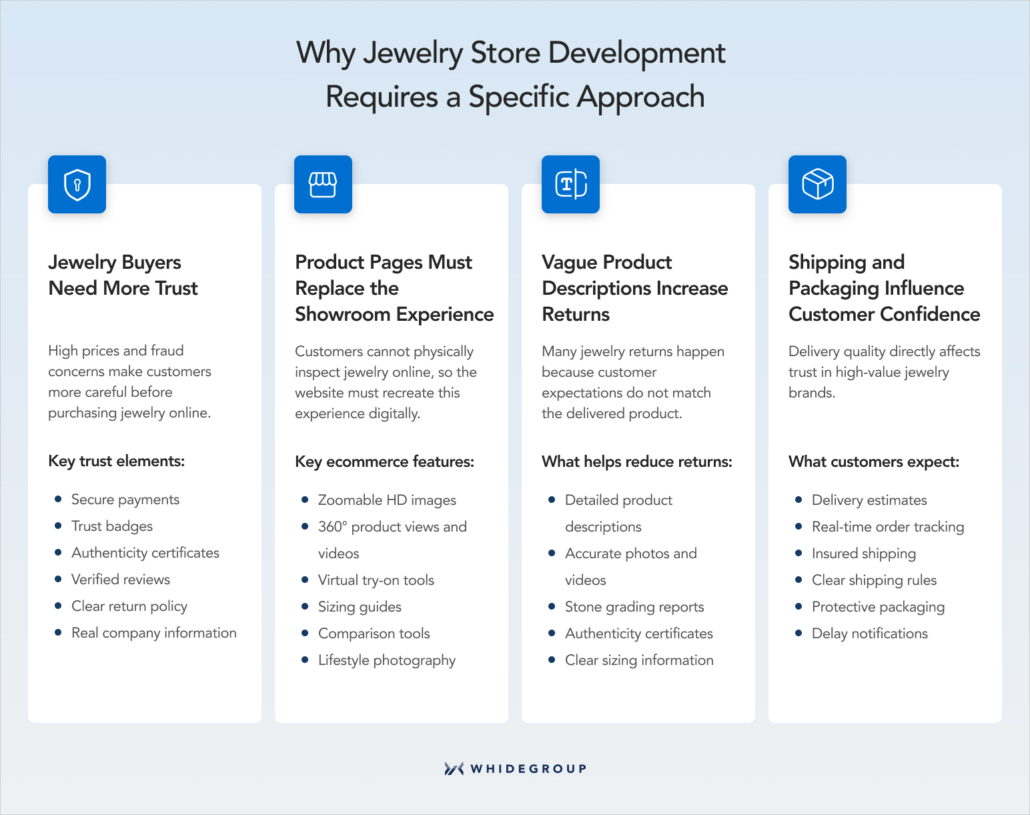
Fraud concerns remain one of the main challenges of selling jewelry online. High prices and differences in material quality make customers more careful when purchasing, especially from unknown stores. Buyers want proof that products are authentic, payments are secure, and support will remain available after the purchase.
To strengthen customer confidence, your development team must integrate features that show evidence of product authenticity and store security:
Jewelry buyers want to inspect products closely before they buy. In a physical store, customers try on rings, check stones under light, and ask questions in real time. Online stores must recreate as much of this experience as possible.
Jewelry store developers use ecommerce tools that can bring the showroom to your website:
Customers may find that a ring is the wrong size, or a gemstone’s clarity differs from the website photo. Sometimes, the item simply does not match the customer’s intended outfit.
You can’t eliminate returns totally, but appropriate tools help reduce return rates:
At the same time, you should also avoid overly edited product photos that create unrealistic expectations. Accurate presentation builds more trust than perfect-looking images that do not match the delivered product.
Long delivery windows make high-value jewelry buyers nervous, while scratched metal or broken clasps upon arrival destroy brand trust. That’s why shipping and packaging should become part of your strategy when planning how to start an online jewelry boutique.
Trusted ecommerce websites already use these capabilities as best practices:
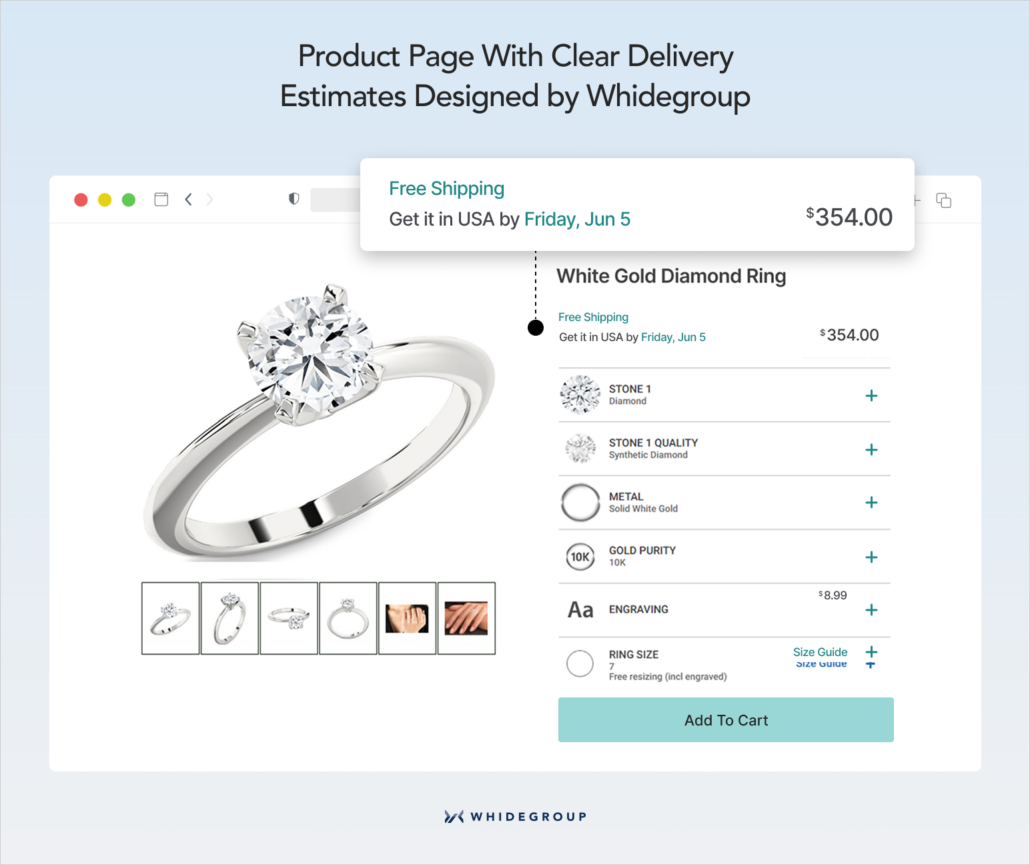
Whidegroup also recommends including such elements:
Whidegroup develops stable and secure online stores that help customers evaluate products and make high-value purchases.
Before starting development, you must clarify your business model, catalog structure, and backend management needs.
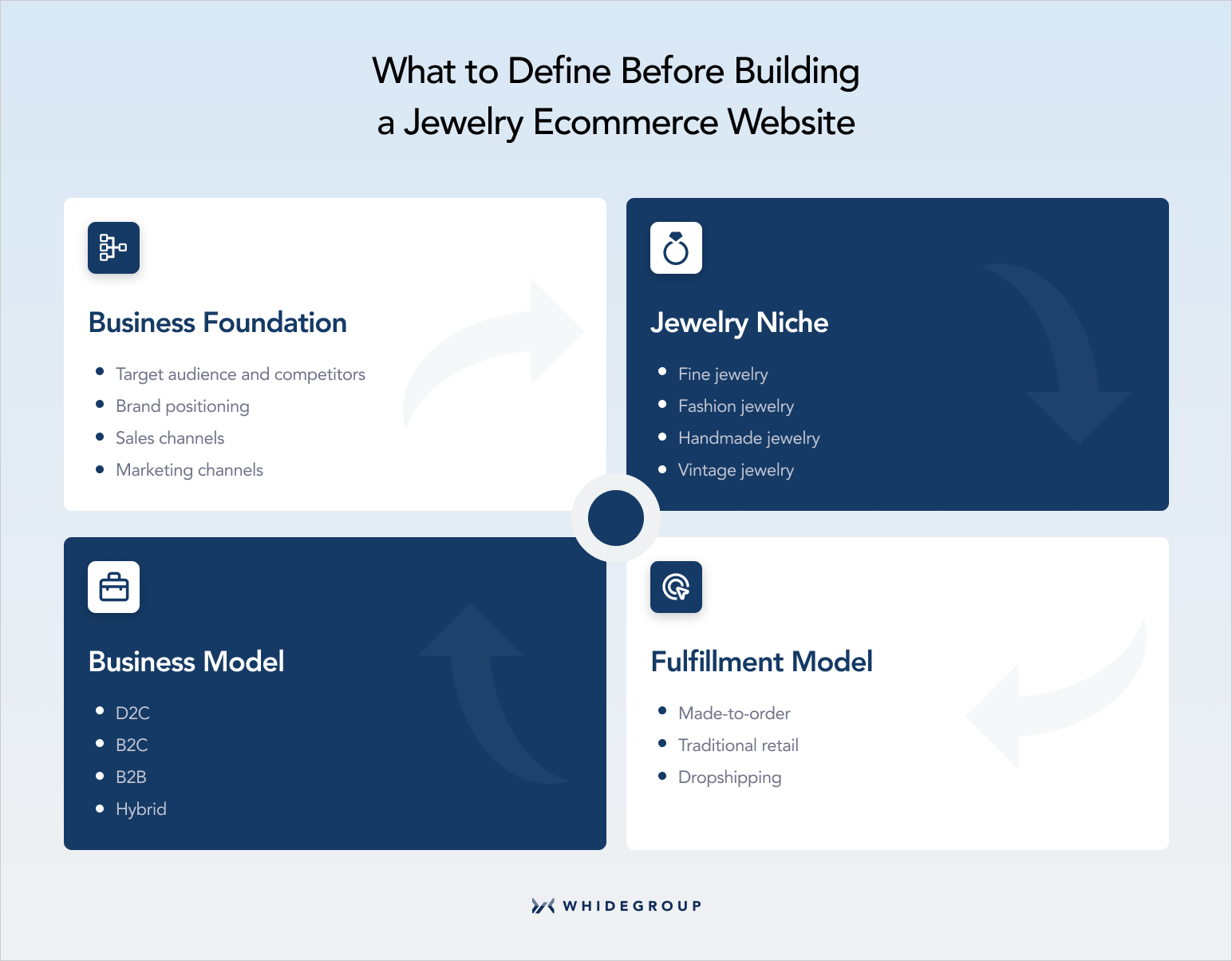
These fundamentals affect your store’s positioning and admin workflows:
The jewelry industry determines your website logic and user interface features.
Fine jewelry
Fine jewelry pieces are made from precious metals and gemstones. Therefore, the stores in this niche should display gemstone certificates, authenticity information, material specifications, and advanced trust signals. Store policies should also clearly explain insured shipping details, warranty coverage, and refund rules.
Fashion (costume) Jewelry
Fashion jewelry is an affordable alternative to fine pieces, usually made from synthetic diamonds, zirconia, glass, and base metals. Instead of authenticity certificates, these stores rely more on customer reviews and social proof that demonstrates product quality. Store success often depends on convenient UX, social media integrations, and fast delivery options.
Handmade jewelry
Consumers value handmade products as unique jewelry masterpieces, so these stores usually require content-focused design with creator pages and brand storytelling.
The storefront may also require product customization features, such as metal selection or engraving options. At the same time, the admin panel should support limited-stock logic and production-time notifications to prevent overselling.
Vintage jewelry
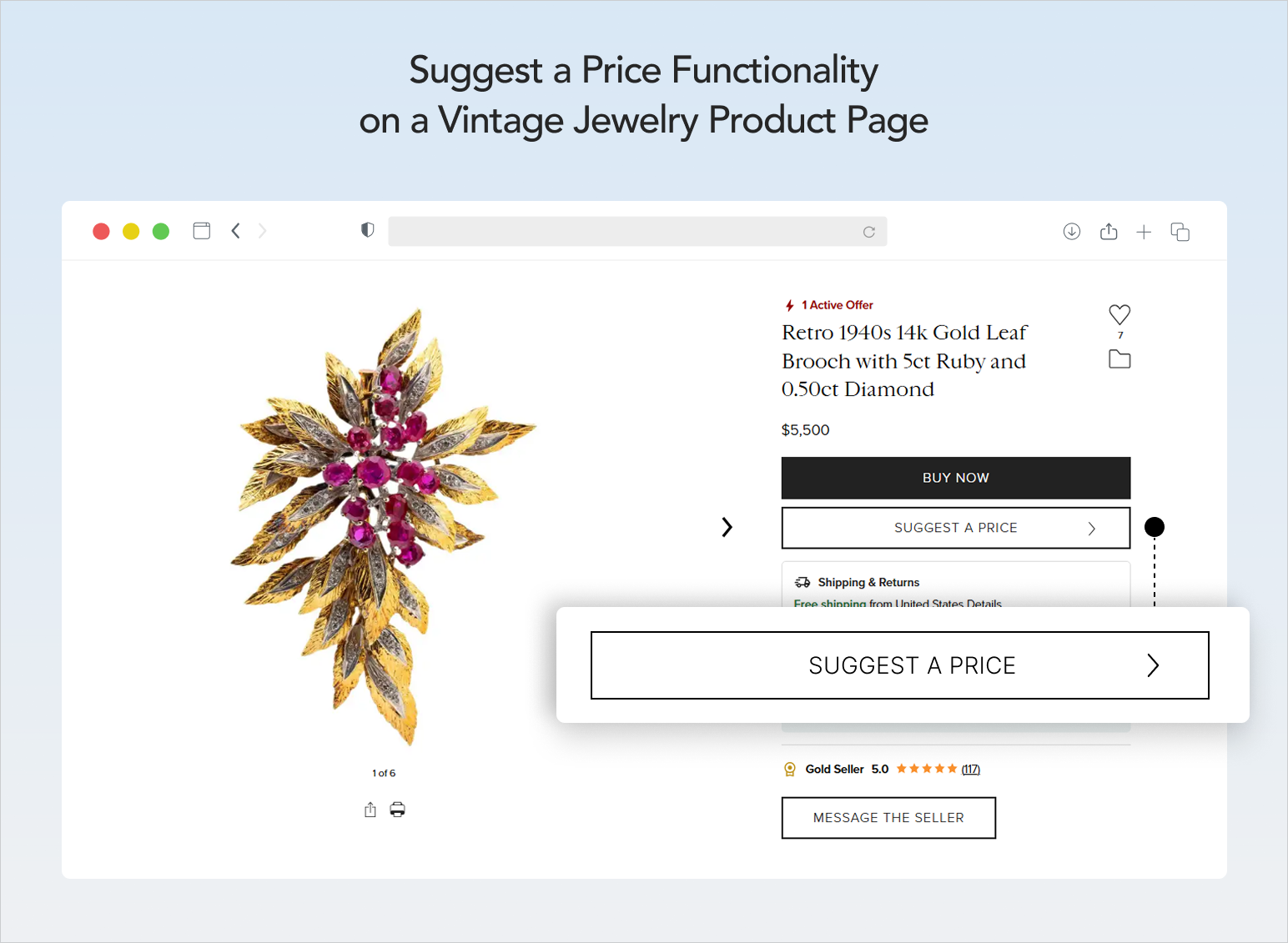
Antique jewelry depends on detailed product descriptions, authenticity verification, and high-resolution product images. The storefront often requires unique functionality, for example, a “make an offer” bidding system similar to auction websites.
Business model choice defines the entire operational flow and customer journey of your store.
The way you source and deliver products also affects ecommerce development decisions.
Your site must build trust, adapt to modern jewelry ecommerce trends, and deliver an immersive shopping experience that guides customers seamlessly from product discovery to purchase. You can achieve these goals with proper planning on how to create an online jewelry store and focusing on optimized feature sets.
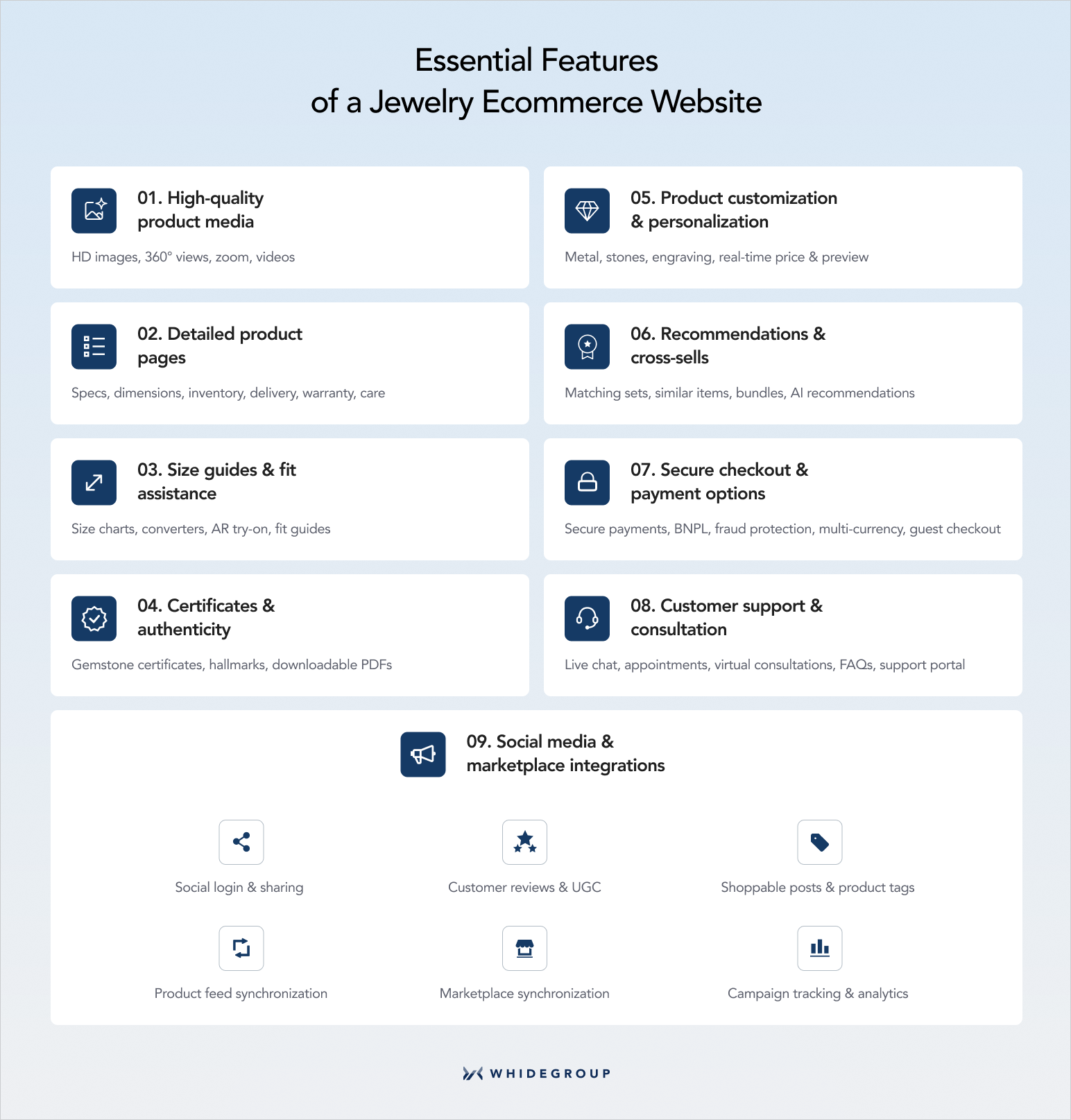
Jewelry buyers rely on visual details to evaluate craftsmanship, metal textures, and gemstone quality. Effective jewelry product presentation usually includes:
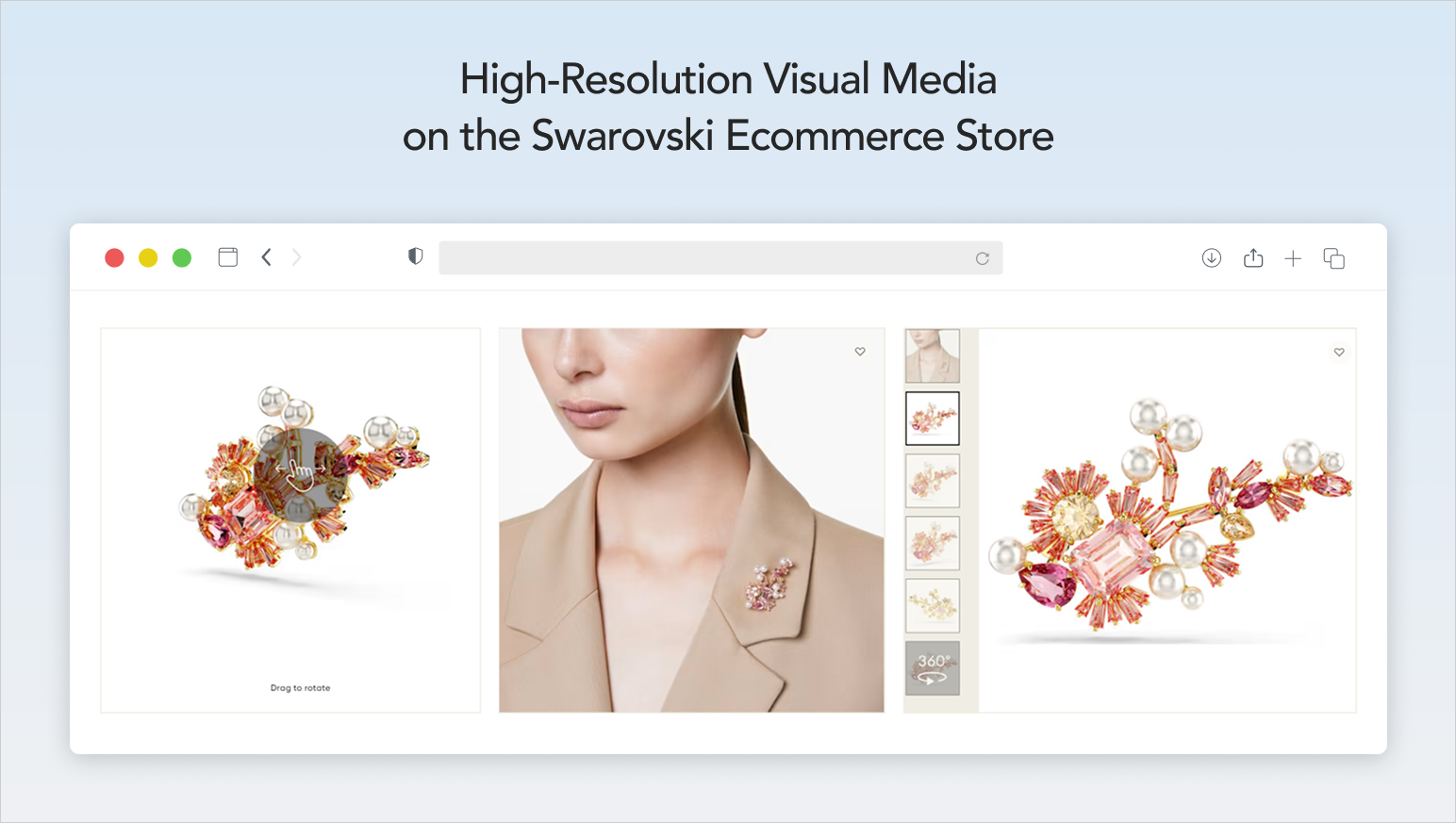
However, hosting hundreds of high-resolution images, video clips, and 360-degree spins can severely slow down your website. To balance visual quality with high page load times, the Whidegroup team applies website performance optimization strategies that include:
To manage customer expectations and reduce returns, build your product page layout to display as much technical and operational details as possible:
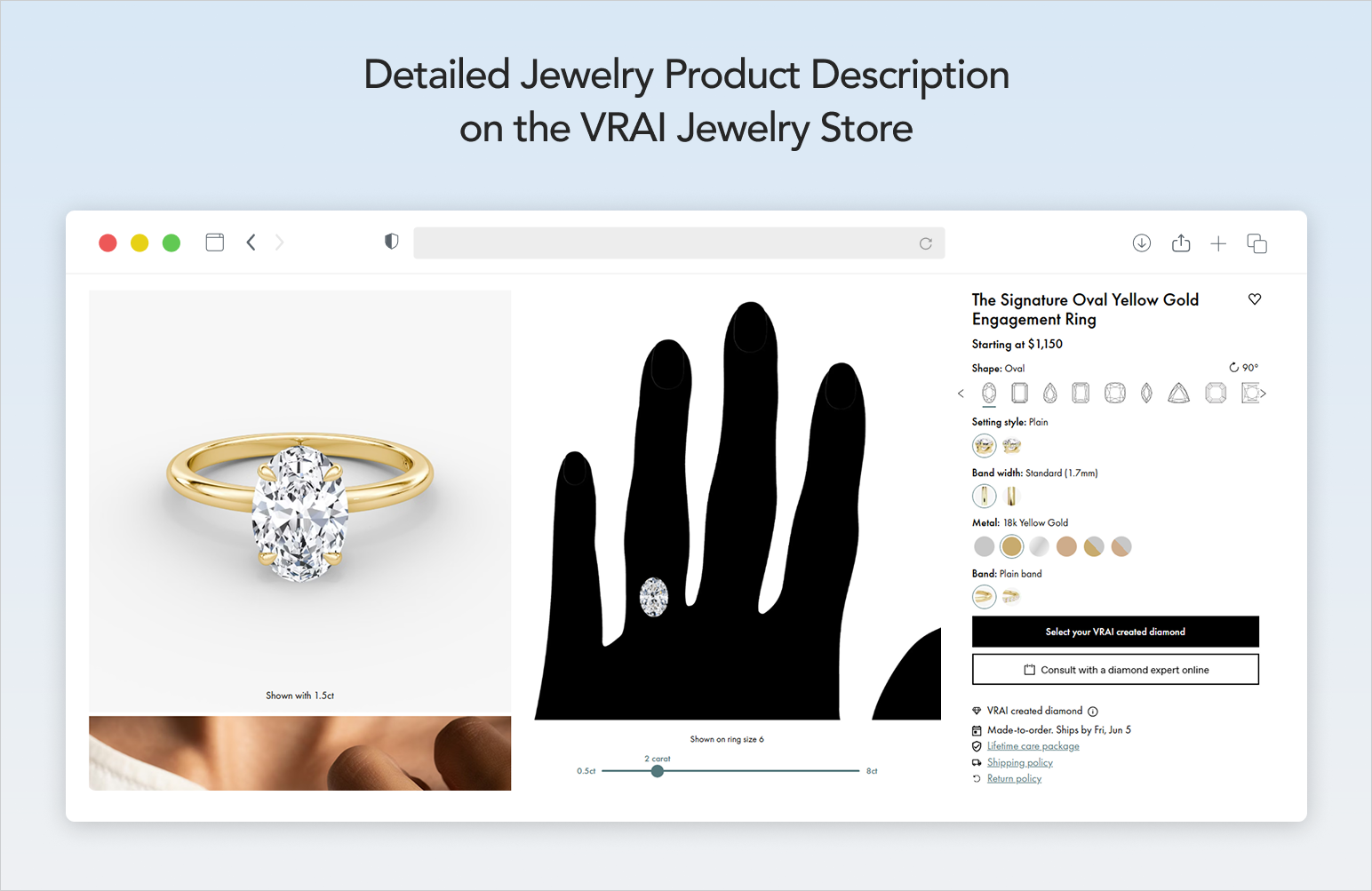
Accurate sizing is one of the biggest friction points in the online jewelry business. Customers cannot physically try on pieces before purchasing, so your ecommerce website should help them choose the correct size with minimal confusion.
To build customer confidence, Whidegroup recommends adding the following fit assistance tools:
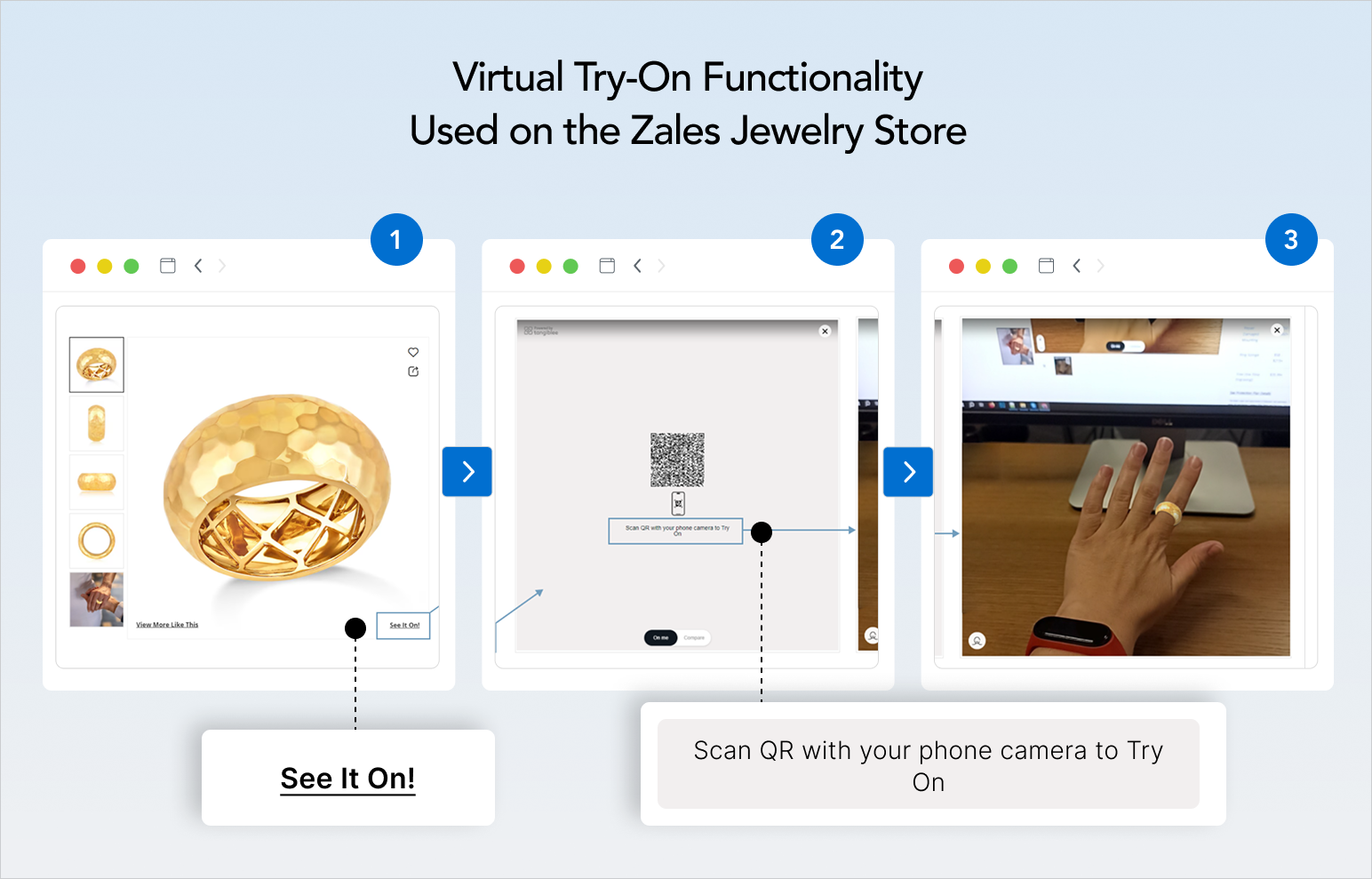
Since many customers shop from smartphones, sizing modules must remain perfectly readable on small screens. Avoid massive, unscannable data tables on mobile layouts. Instead, use responsive dropdown menus, swipeable horizontal charts, and large buttons that prevent accidental mis-clicks.
Customers purchasing expensive items expect proof of authenticity, so jewelry ecommerce websites should present certification and material information:
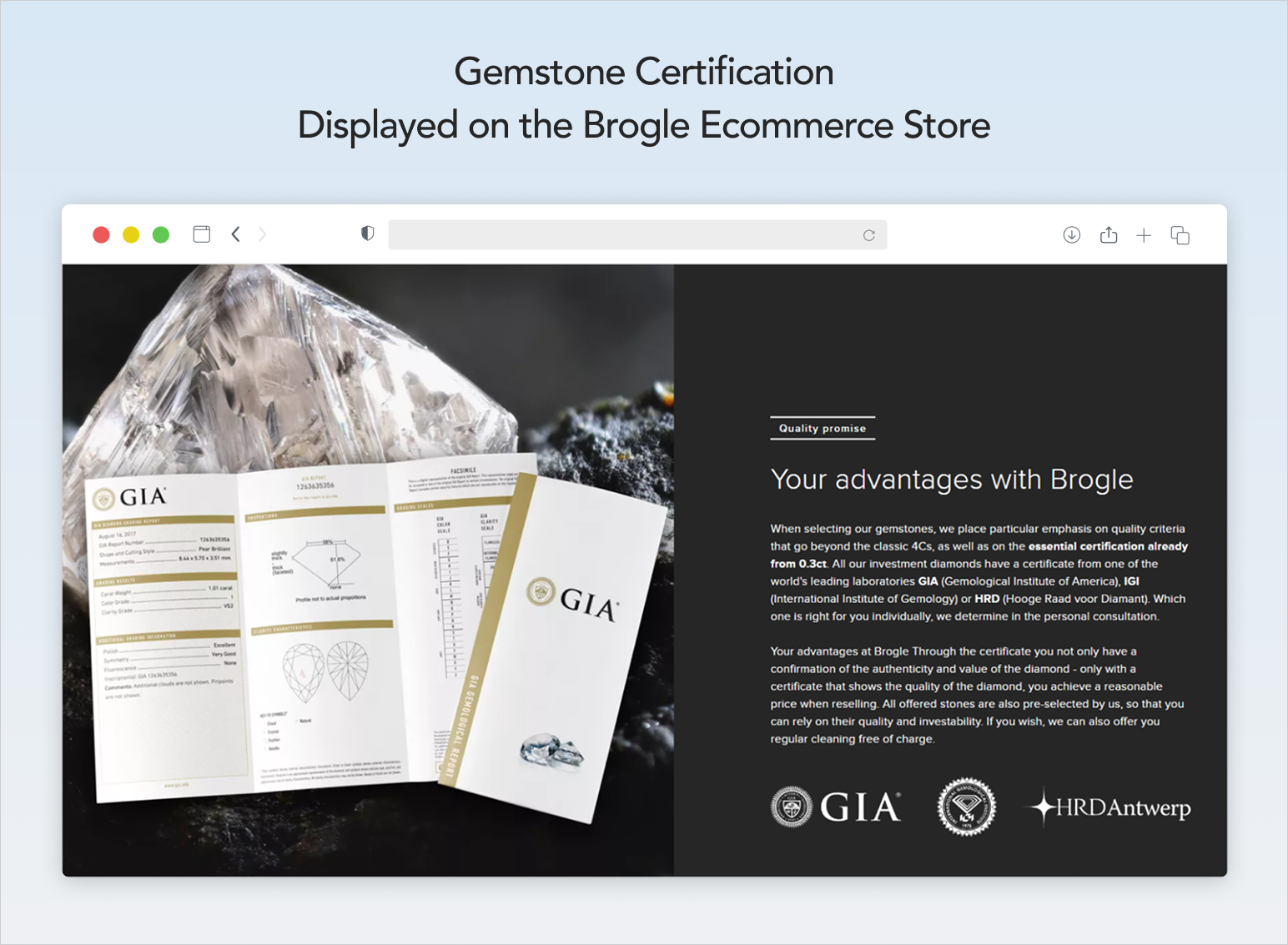
Whidegroup tip
You can strengthen these trust signals even more if you go beyond static pages and implement additional functionality:
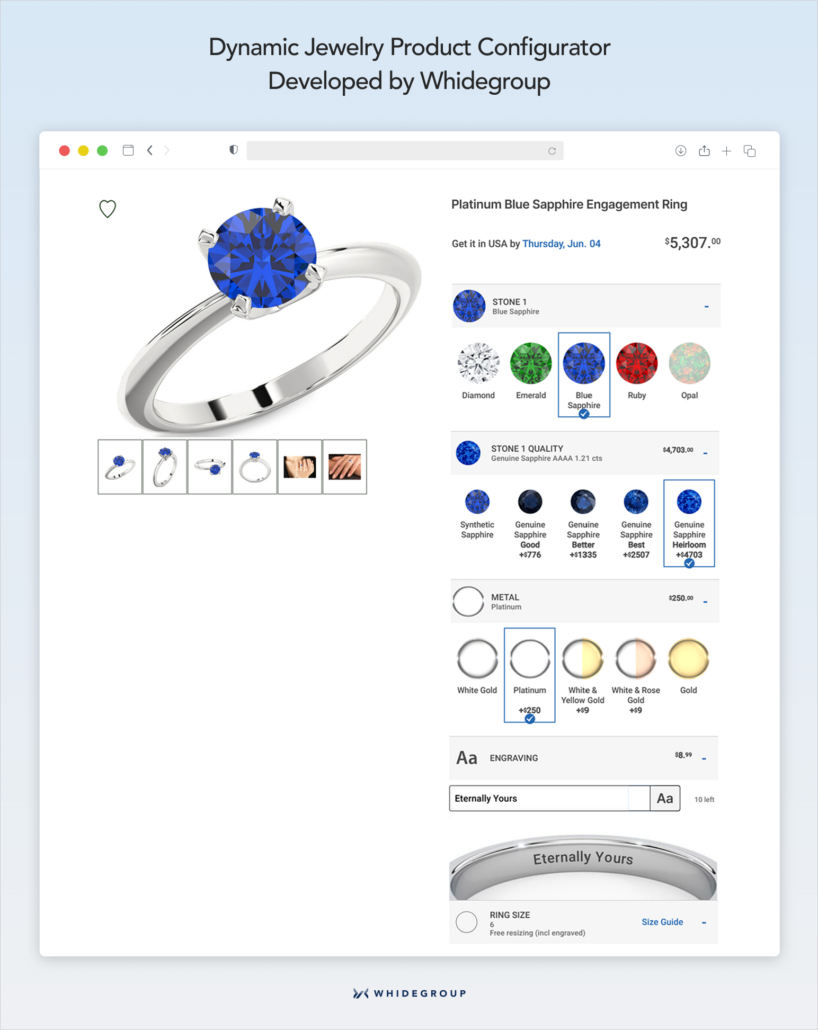
Modern jewelry companies often deliver on-demand customization services which require bespoke product builders. In this case, the product page should provide visual buttons that let shoppers swap between different options:
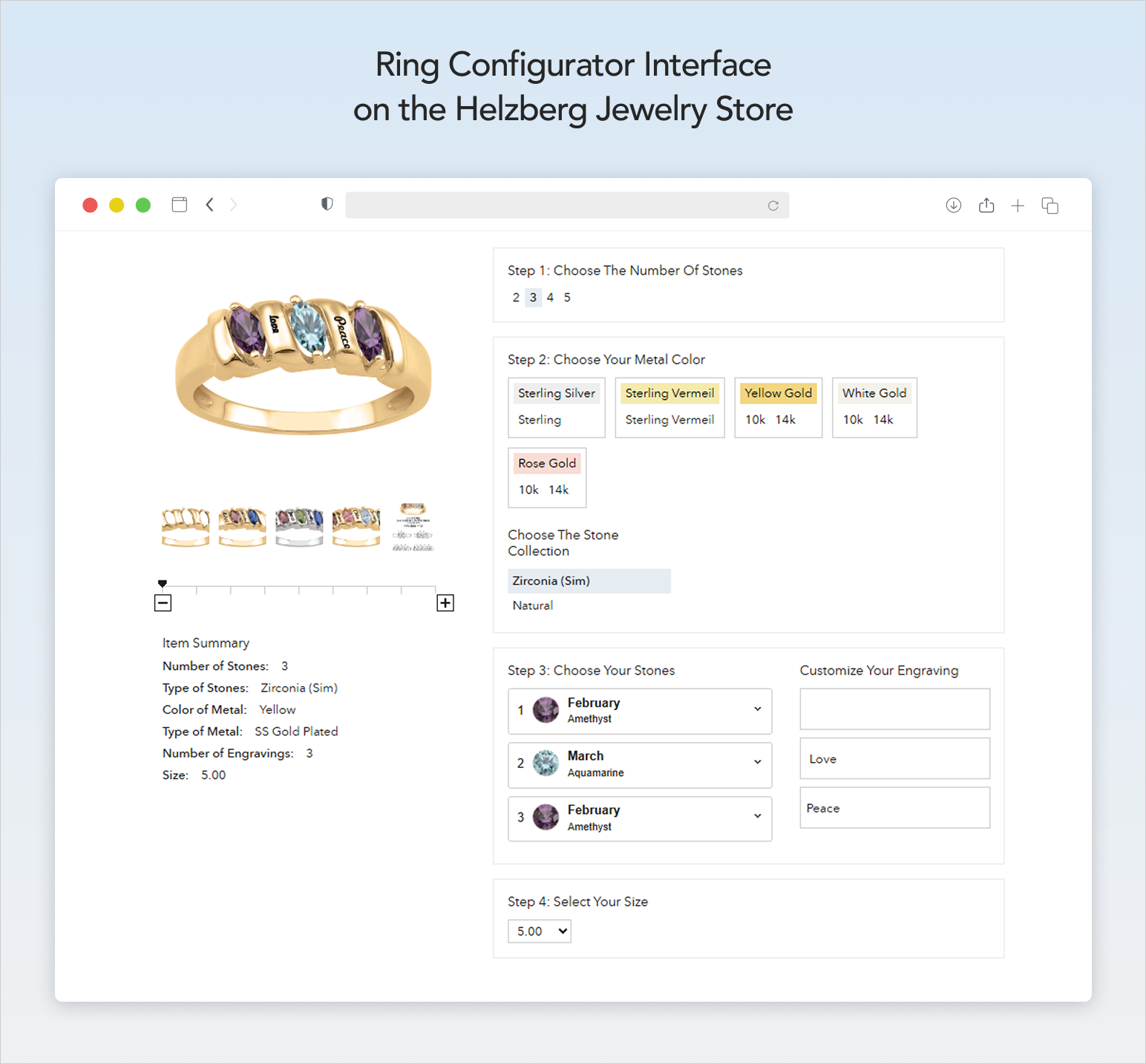
Typically, such an extensive feature set does not fit standard product page layouts, so it requires custom design. However, the storefront appearance is only part of the challenge. Every selected option affects pricing, product availability, delivery timelines, and product presentation, so most of the complexity lies in the back-end logic.
Here’s what Whidegroup developers focus on in similar projects:
In short, your ecommerce platform must dynamically swap visual assets and calculate values for every item presented in your catalog.
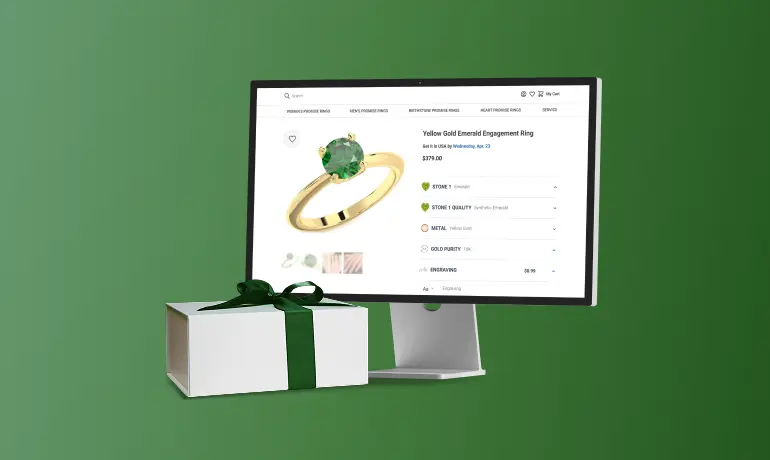
For example, in one jewelry ecommerce project, Whidegroup extended Magento 2 custom options functionality for a store with more than 60,000 SKUs. The system now dynamically updates product images, descriptions, authenticity certificates, and prices based on selected gemstones and metals. On top of that, we reduced total server media volume by 67%, boosting server operation speeds.
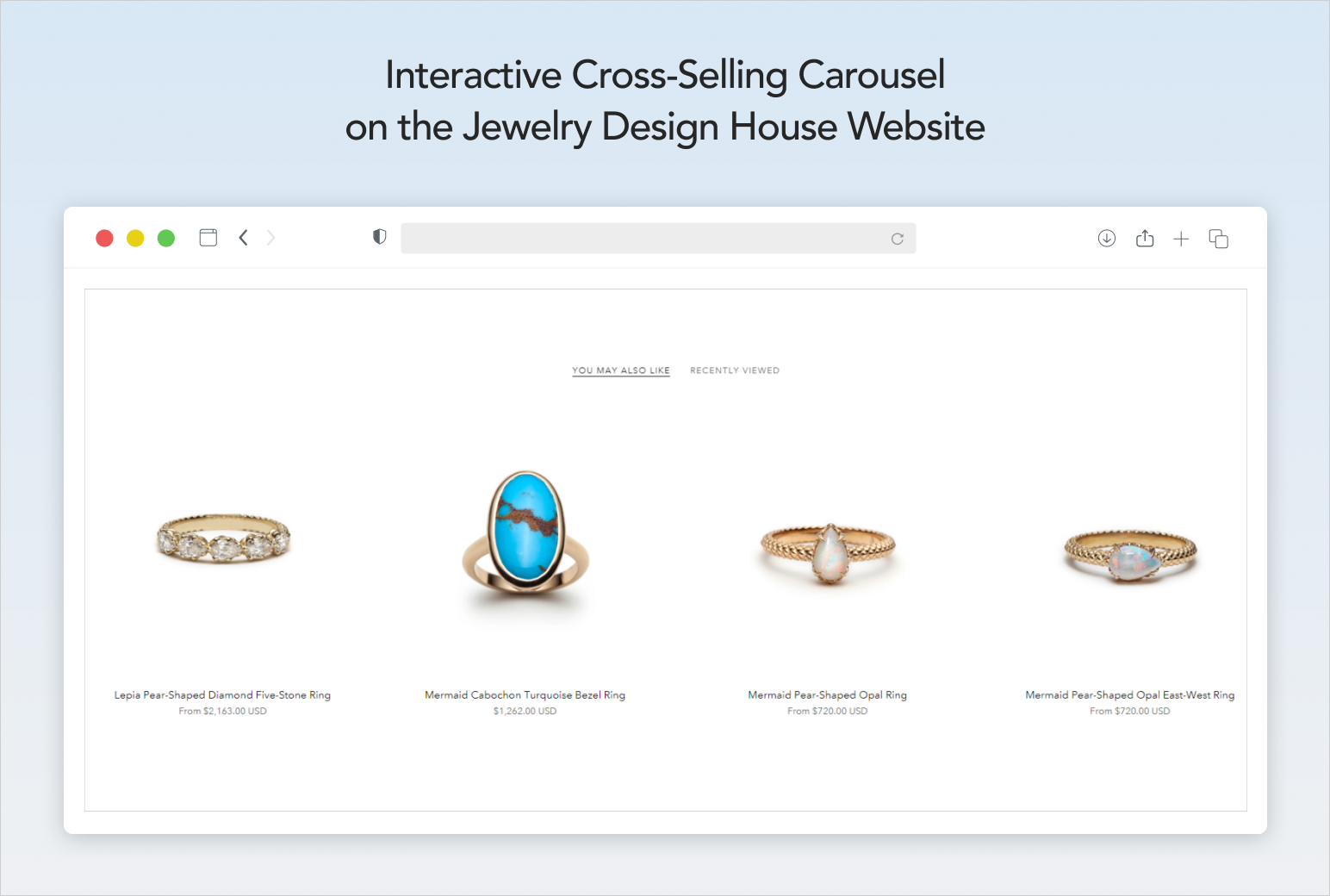
Product recommendation modules help customers discover additional items, increasing the average order value of your store. These blocks should suggest combinations that match customer preferences and purchase intent.
Recommendation-related features may include:
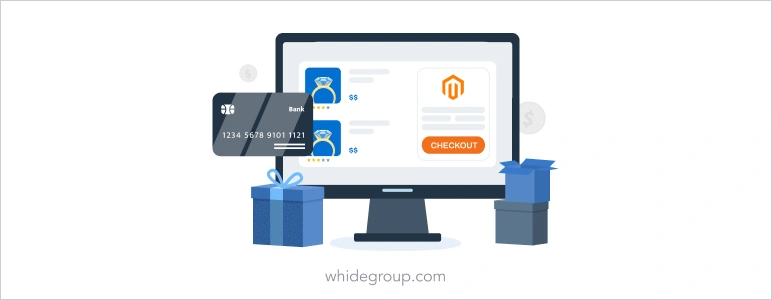
Fine jewelry is often expensive, so shoppers need strong security and clear payment terms before they enter their payment details. Beyond security, your checkout must provide flexibility and speed to reduce cart abandonment.
Eventually, the checkout should contain:
Jewelry stores selling internationally should also support multiple currencies and localized payment methods to reduce friction for global customers.
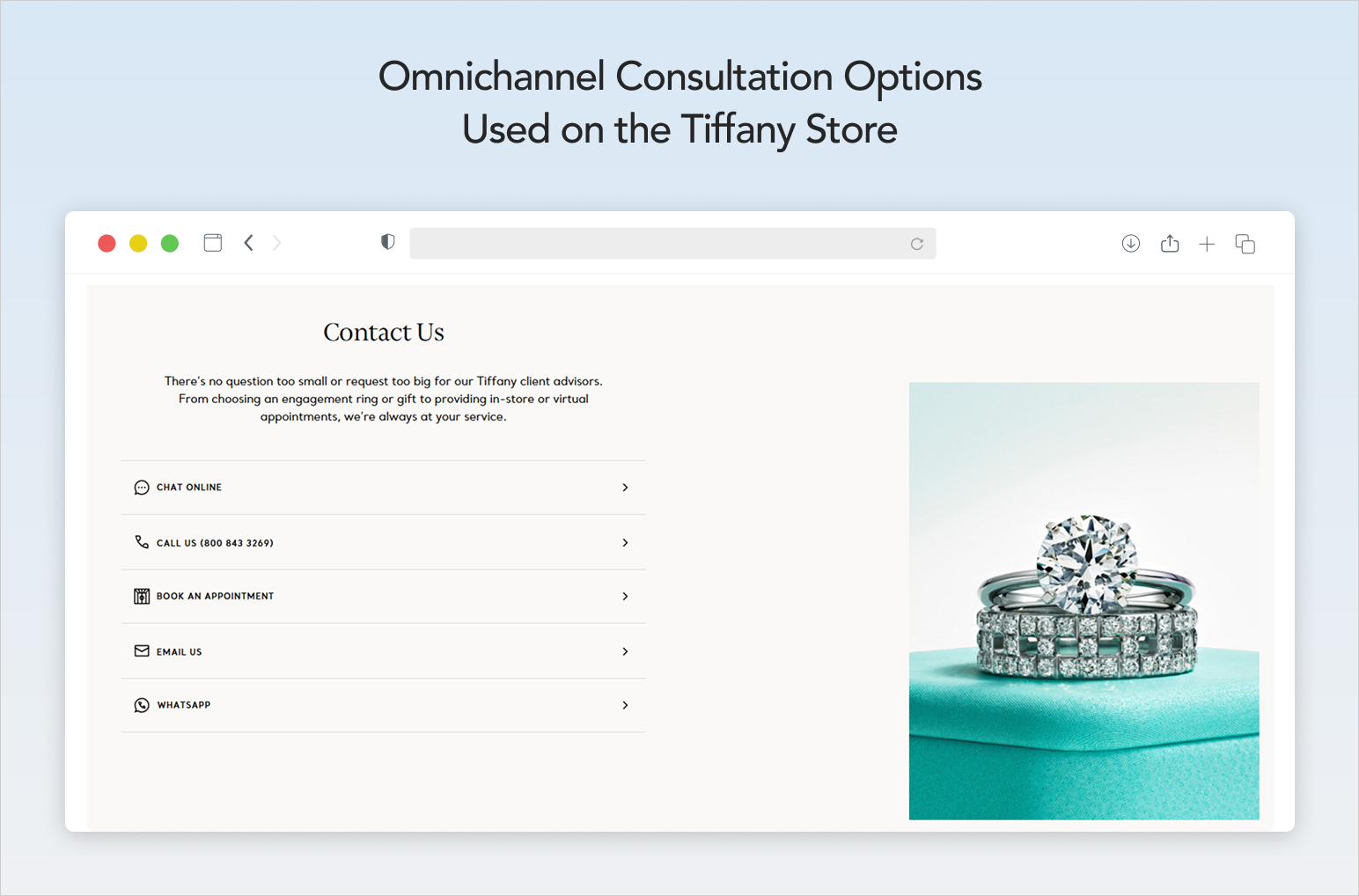
To reduce hesitation before checkout and support customers after purchase, offer several communication channels:
Multi-channel connections help link different discovery and buying touchpoints directly to the brand’s official website. Linking with social media is especially useful for seasonal collections and limited-stock items, while external marketplaces help brands expand their geographic reach and increase total business revenue.
When our team works on jewelry store projects, we typically integrate the following functionality:
As a final step to monitor the effectiveness of these channels, we implement campaign tracking functionality. This setup allows you to accurately measure and analyze traffic and jewelry sales across every sales channel.
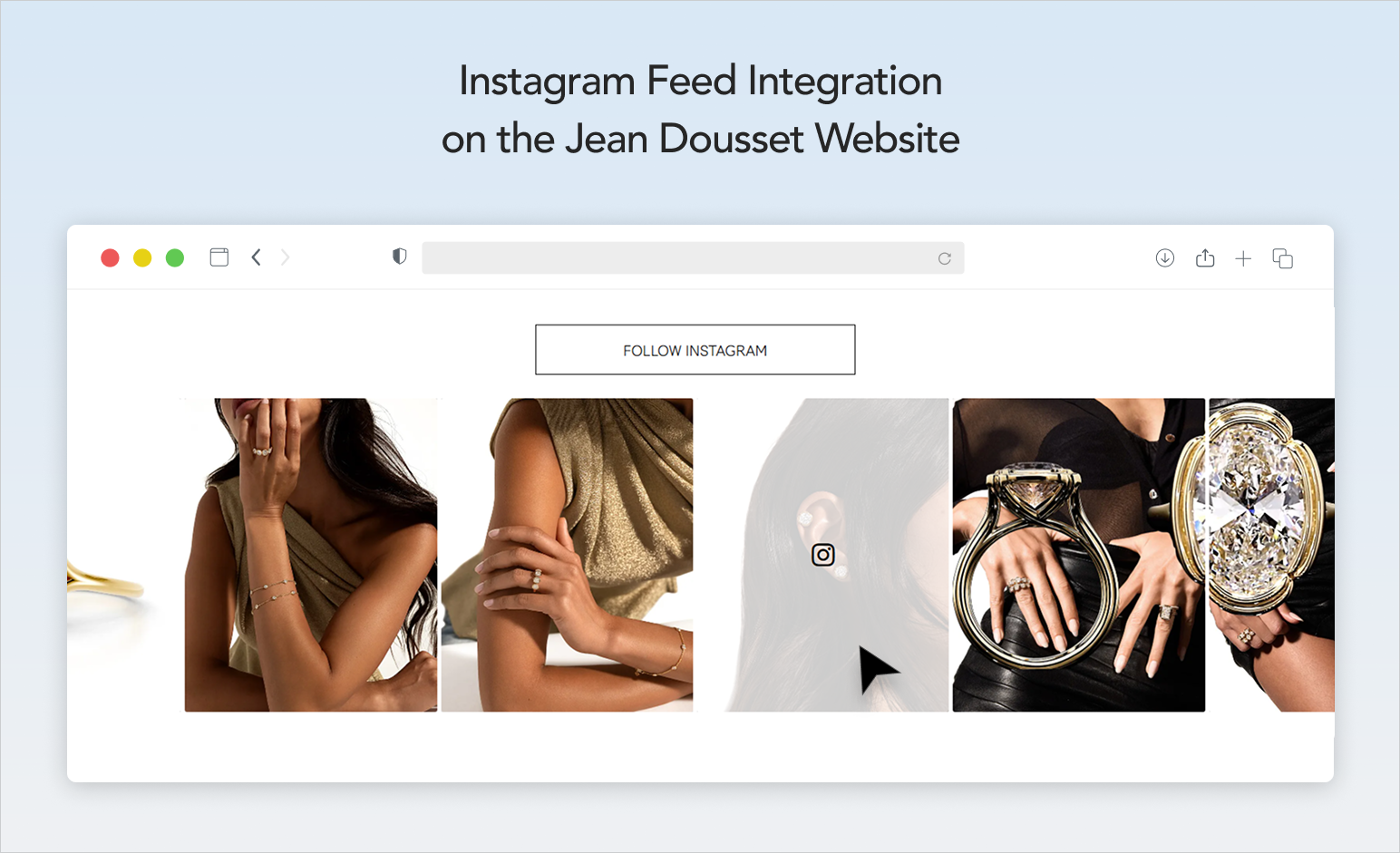
The right ecommerce platform should support your catalog structure and custom functionality. Focus on software that matches your current business complexity and can scale with your product range.
We analyze the top platform options in detail in our dedicated guide to the best website builders for jewelry. To help you make a quick initial assessment, the table below highlights the strengths and boundaries of each major platform.
| Platform | Best for | Limitations |
| Shopify | Brands with simple catalog structure that need fast launch. | High transaction fees when using third-party payment gatewaysLimited custom logic, especially on basic plans |
| Magento / Adobe Commerce | Businesses with large catalogs, hybrid B2B/B2C models, or highly customized products. | Requires professional Magento developers to set up, secure, and maintain the store |
| BigCommerce | Growing retail businesses that need basic built-in features without managing hosting. | Rigid storefront customizationMandatory pricing plan upgrades based on sales volume |
| WooCommerce | Brands that focus on content marketing rather than complex product customization logic. | Heavy reliance on third-party pluginsRequires professional developers for customization needs |
| Punchmark | Luxury brands willing to pay more for jewelry-specific all-in-one services. | Higher entry costsLimited design flexibility |
When choosing a platform to start a jewelry business online, use the following parameters as your guide:
The more complex and tailored your website needs to be, the more you will need an open-source platform like Magento.
Successful development projects for jewelry start with defining jewelry-specific requirements before the project begins.
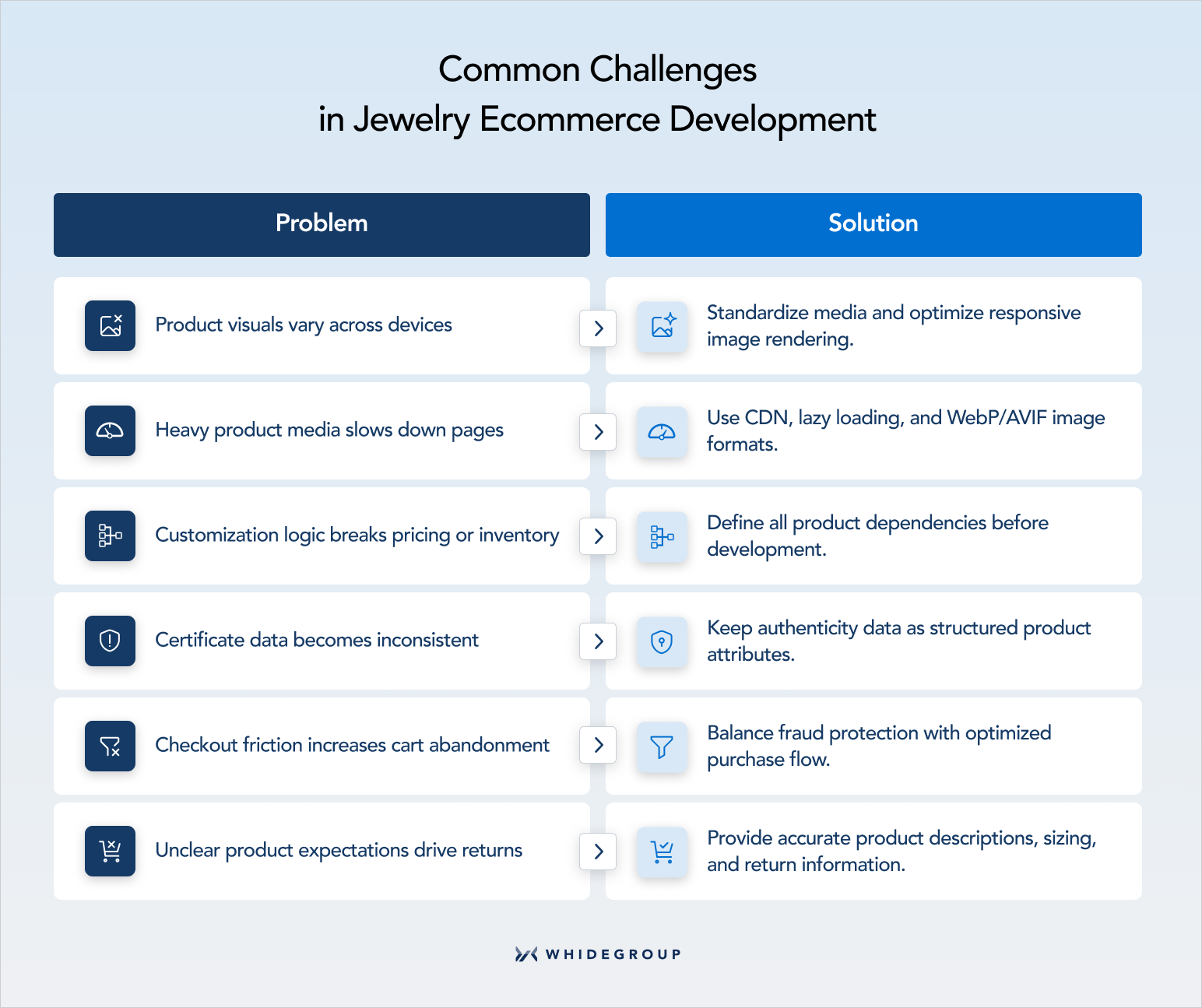
Problem. Jewelry items may look different across various photos, devices, or lighting conditions. For example, a rose gold ring may look like yellow gold on a poorly calibrated mobile screen, or stone colors might shift between different category views.
Why does it matter? Inconsistent visuals damage brand trust and lead to high return rates from disappointed buyers.
What to plan. Implement strict color-profile standards for all raw photography assets before uploading them to your media library. Your front-end developers must build responsive, retina-ready image containers and configure high-magnification zoom tools that preserve crisp metal textures and natural gem facets consistently across all screen sizes.
Problem. Jewelry websites rely heavily on extensive visual assets, such as 4K zoom files, 360-degree video loops, and live AR streams. These visuals clearly showcase intricate craftsmanship, but without optimization, these assets slow down website pages.
Why does it matter? Slow-loading pages negatively affect conversions, mobile UX, SEO visibility, and advertising performance.
What to plan. Integrate automated image optimization pipelines directly into your content management system. Your architecture should automatically convert traditional files into modern WebP or AVIF formats, use a CDN, and implement lazy loading.
Problem. Custom jewelry often cannot be managed through standard logic alone. Product options may affect images, pricing, production timelines, certificates, and availability simultaneously.
Why does it matter? Poorly planned customization logic creates incorrect pricing, broken product combinations, and inventory conflicts — all of which lead to customer churn.
What to plan. Define all product dependencies, pricing formulas, customization rules, and catalog structure before development begins.
Whidegroup helps jewelry businesses build stores where complex product options, pricing, and operations work as one clear flow.
Problem. Store managers often handle gemstone certificates and other authentication documentation manually across separate spreadsheets or standalone image files. As a result, customers may see conflicting information across different website pages.
Why does it matter? Inconsistent authenticity information overloads support teams and reduces customer trust.
What to plan. Design your database schema to treat certification metrics as core, structured product attributes instead of random text blocks. Build automated workflows to link specific certificate PDFs directly to individual product SKUs.
Problem. High-ticket jewelry purchases naturally trigger customer hesitation, strict credit card fraud checks, and transaction spending limits.
Why does it matter? Too many verification steps cause massive cart abandonment rates, while weak security measures reduce trust.
What to plan. Balance fraud prevention with convenient UX by implementing secure payment gateways, optimized mobile checkout, and transparent pricing throughout the purchase flow.
Problem. Online shoppers may misunderstand product size, material color, gemstone clarity, delivery conditions, or return eligibility before purchasing.
Why does it matter? Unclear expectations increase customer complaints, support requests, and refund-related operational costs.
What to plan. Prepare accurate sizing guides, realistic product media, detailed product descriptions, transparent shipping information, and clearly visible returns and refunds policies before launch.
We analyze general pricing drivers in our complete guide to ecommerce website development costs. However, jewelry ecommerce websites often require more custom functionality than standard online stores, which increases the costs.
The table below shows the most common cost drivers and realistic 2026 price ranges for website development when you start your own jewelry business.
| Cost factor | Average costs | What affects the price |
| Platform Choice | Magento Open Source: free Adobe Commerce: custom enterprise pricing Shopify: $39–$399/month Shopify Plus: from $2,300/month | SaaS platforms reduce infrastructure costsOpen-source platforms support deeper customization but require larger development budgets |
| Storefront design | Ready-made templates: $40–$200 Custom design: $1,500–$10,000 | Whether a ready-made template can be used as a baseNumber of unique page layoutsSeparate desktop and mobile layoutsResponsive optimization requirements |
| Product catalog complexity | Basic settings included in core development costs Custom logic development: starts from $1,500 | Large SKU countsComplex product attributes and filtering logicVariant combinations for gemstones, metals, and sizesAdvanced search and layered navigation |
| Product Customization | $5,000–$30,000+ | Interactive product configuratorsEngraving logicDynamic pricing calculationCustom jewelry builders |
| External integrations | Ready-made Shopify themes: $100–$500 Ready-made Magento themes: $40–$150 Custom API integrations: from $2,000 | Number of integrations and possible module conflictsNeed to customize third-party modulesERP, CRM, PIM, or shipping integrationsCustom API development requirements |
| Checkout & payment complexity | Basic settings included in core development costs Custom checkout work: $1,000–$15,000+ | Built-in functionality of the selected platformNumber of payment gatewaysCustom checkout logic requirementsCurrency conversion and international payment support |
| B2B Functionality | Shopify Plus / Adobe Commerce B2B: included in license cost Custom module development: $5,000–$25,000+ per one | Wholesale portals for jewelry buyersBulk pricing tiersCustom price listsQuote management and approval workflows |
| Performance optimization | $3,000–$8,000+ | Catalog sizeNumber of media files and 3D assetsCustomization volumeCore Web Vitals optimization requirements |
| Ongoing support & maintenance | $500–$5,000+ per month | Open-source vs. SaaS platformPay-as-you-go vs. monthly retainer supportStore sizeCustomization volumeUpdate and monitoring frequency |
Share your business requirements with Whidegroup experts, and we’ll prepare a detailed estimate for your project.
Whidegroup develops websites for jewelry ecommerce business owners who are starting a jewelry store, as well as for established brands with diverse product types and technical requirements. Some projects involve a fast launch with built-in ecommerce functionality, while others demand complex customization due to large product catalogs and unique business logic.
The two case studies below demonstrate how we handle different levels of project complexity.
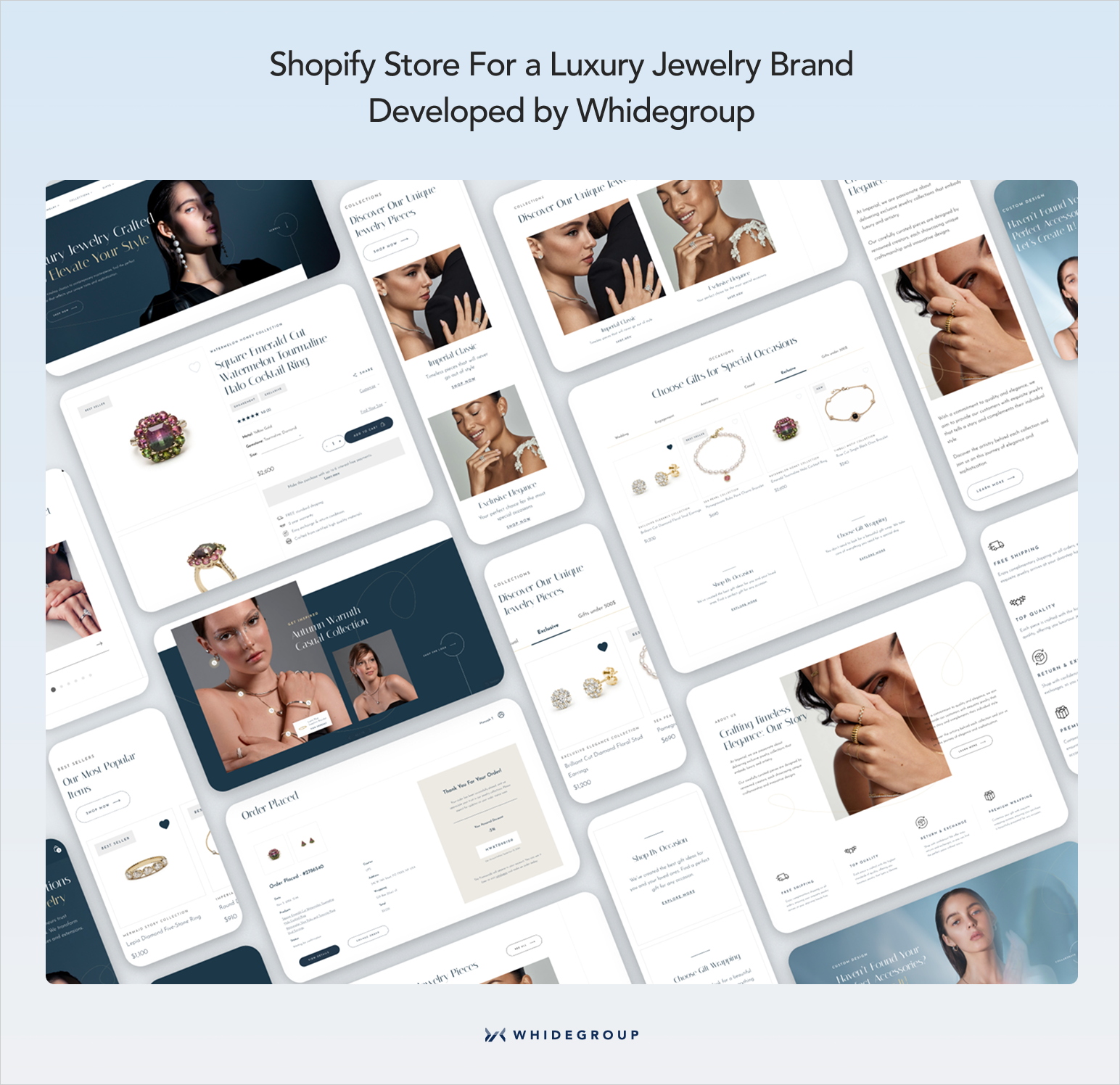
Starting an online jewelry store with complex, large catalogs goes far beyond standard online retail features. When a catalog includes thousands of SKUs, custom product options, certificates, and dynamic pricing, these elements must be planned as one connected system. Otherwise, the store can become difficult to manage and confusing for customers.
Whidegroup develops jewelry ecommerce stores with different levels of complexity, from fast Shopify launches to high-SKU Magento projects with custom product logic. This experience helps us plan websites around what jewelry buyers actually need before purchase: clear product details, trust signals, secure checkout, and smooth product configuration.
If you are planning a jewelry ecommerce project, contact Whidegroup to discuss your business requirements and the right development path for your store.
Yes, Magento works well when you grow your business, especially for large-scale, high-SKU jewelry ecommerce stores that require complex product customization, multi-store architecture, and API-integrations with external systems.
The right choice depends on your store complexity and growth plans:
– Shopify is usually better for small businesses and mid-sized jewelry brands that need faster launch times and simpler management.
– Magento fits businesses that require advanced customization, complex catalog structure, multi-store architecture, and custom back-end logic.
Custom product logic becomes necessary when product options affect multiple elements simultaneously. For example, changing gemstones or metals affects pricing, product images, certificates, availability, or production timelines. Stores with made-to-order products, large SKU volumes, or advanced product customization usually require custom development.
Jewelry ecommerce stores can reduce returns through better product presentation and expectation management:
– Product presentation. High-resolution images, 360-degree product views, videos, sizing guides, detailed descriptions, and gemstone certificates help customers evaluate jewelry more accurately before purchase.
– Expectation management. Clear shipping terms, return policies, delivery timelines, custom-order conditions, and warranty information help customers understand what to expect after placing an order.
Trust comes from clear product information, secure checkout, and transparent policies. Jewelry websites can build it through:
– Product trust: authenticity certificates, detailed descriptions, gemstone details, product photos, and customer reviews.
– Payment trust: secure payment gateways, trust badges, fraud protection, and clear checkout steps.
– Policy trust: warranty information, insured shipping details, return rules, and delivery timelines.
AR is not mandatory for successful jewelry businesses with online presence, but it can be useful for products where size, fit, or appearance on the body strongly affect the purchase decision. Virtual try-on tools are most relevant for rings, earrings, necklaces, and high-consideration items.
Before investing in AR, make sure your store already has fast page speed, accurate product data, clear pricing logic, and a smooth mobile checkout.


 The Best Shopping Cart Software for Ecommerce Business: How to Choose the Best...